Guides and articles
Underpinning articles and guides for Southampton homes
Find out what a crack means, how the ground beneath your home behaves, and what happens when a specialist firm carries out underpinning. These pages cover surveys, repair methods, party walls and making good afterwards.
Understanding why walls crack and floors slope
A crack in the brickwork or a door that sticks does not always mean the house is falling down. It does mean something has moved, and finding out what that movement is matters before anyone starts digging.
Clay soil shrinks when it dries out and swells when it gets wet. In Southampton, long dry summers pull moisture from the ground, and the foundations settle into the gap left behind. The reading on cracks after a dry summer explains why walls move in clay soil and what to look for once the rain returns. Stepped cracks following the mortar lines between bricks are another common sign, and there is a page that looks at whether stepped cracks are serious or simply cosmetic.
Tree roots take water from the same soil your home sits on. A mature oak or willow can draw thousands of litres from the ground each year, drying the clay unevenly. The guide on tree roots and subsidence sets out the signs to look for near your home.
Before any work begins, a specialist firm carries out a subsidence survey to measure the movement and establish its cause. That survey determines whether the problem needs underpinning or just monitoring.
How underpinning works and the methods used locally
Underpinning strengthens the ground beneath existing foundations so the house stops moving. The method a specialist firm chooses depends on the soil, the depth of stable ground and the building itself.
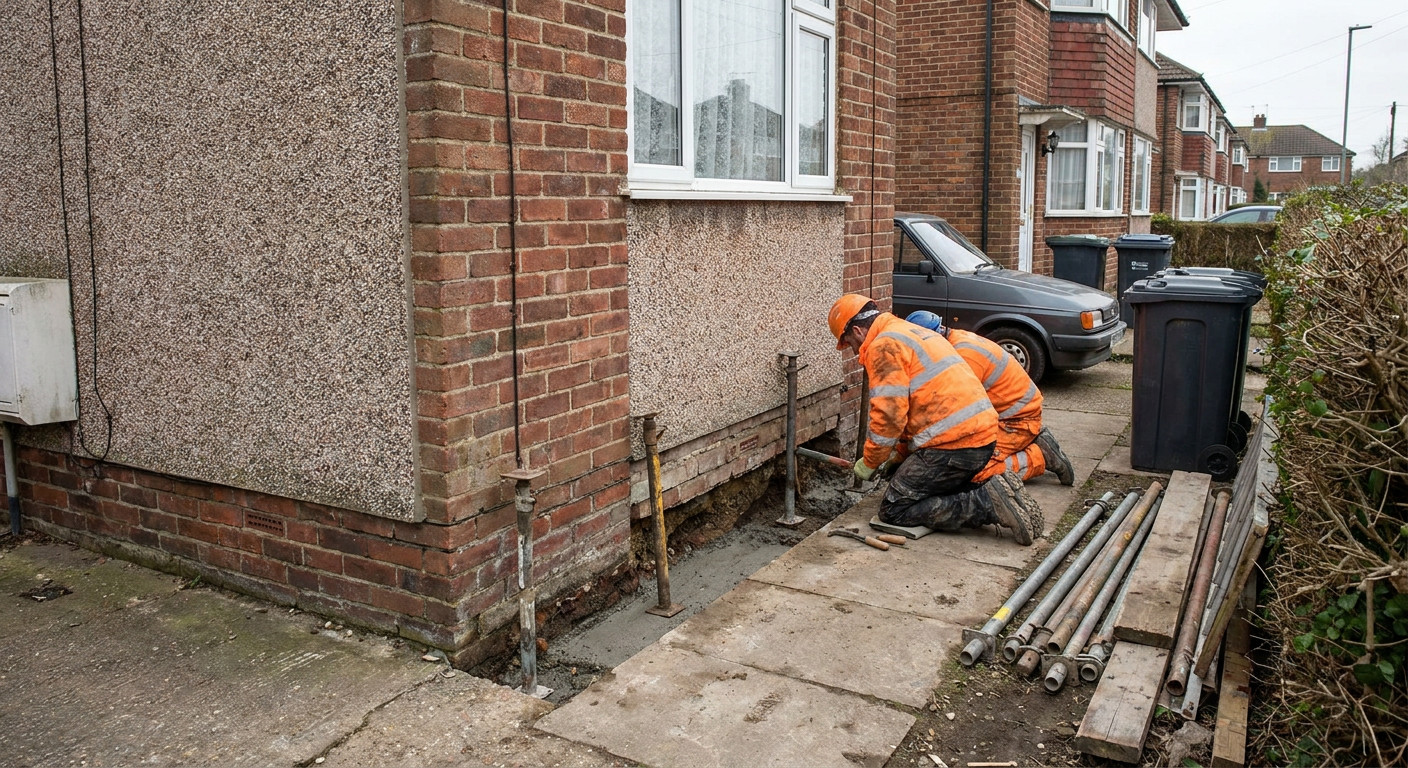
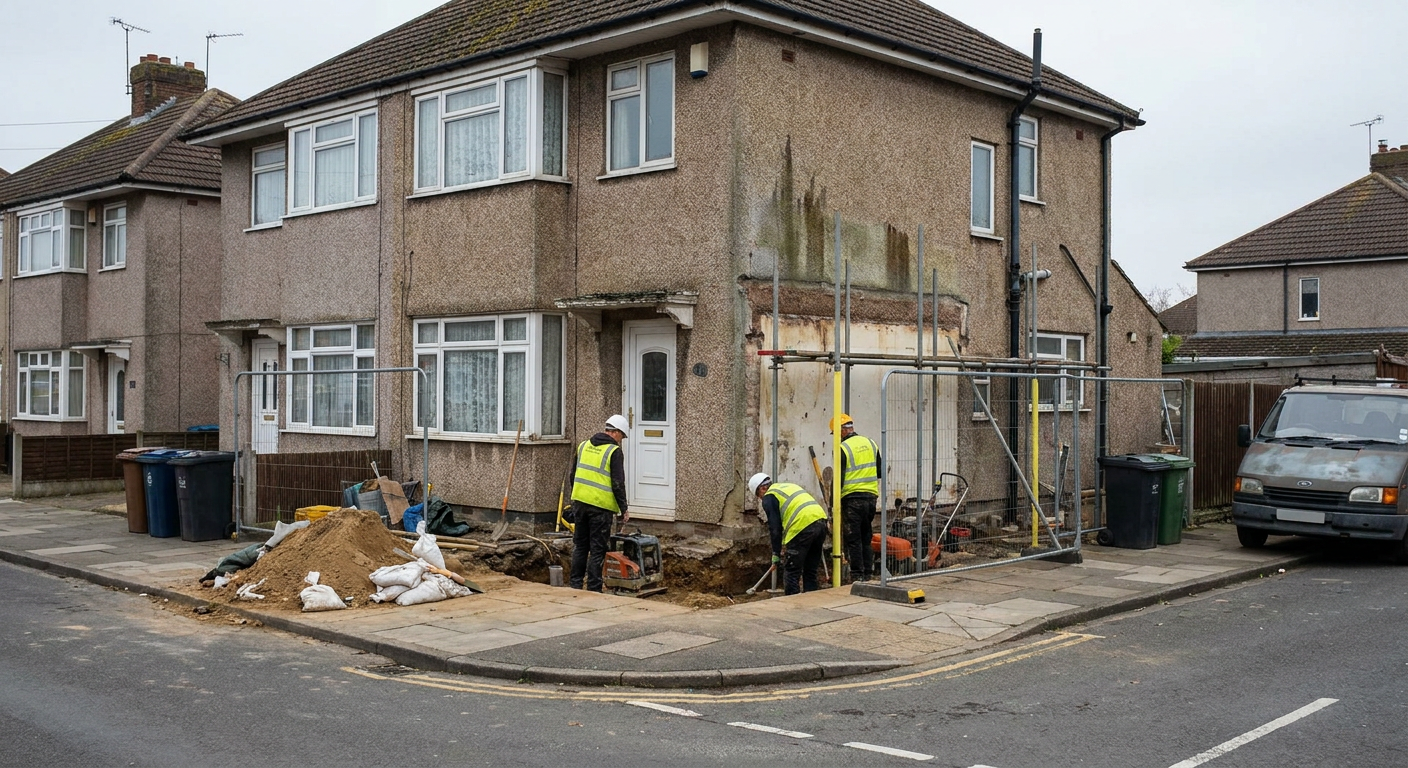
Mass concrete underpinning is the oldest approach. A contractor digs sections beneath the existing footing in sequence and fills them with concrete, creating a new, deeper base. The page on mass concrete underpinning in Southampton explains how the work proceeds bay by bay so the wall above stays supported throughout.
Where stable ground lies deeper, mini piled underpinning reaches it. Steel piles are driven or bored down until they rest on a load-bearing stratum, and a reinforced concrete beam transfers the weight of the house onto them. There is a separate piece on pile and beam underpinning that shows how the load is carried from wall to pile.
Resin injection offers a different route. A specialist pumps expanding resin into the ground beneath the foundation, compacting loose soil and lifting settled footings back towards their original level. The page on resin injection in Southampton covers where this method suits the local geology and where it does not.
For cellar conversions, basement underpinning lowers the floor while supporting the walls above. Each method requires a firm that understands Southampton's mix of river terrace gravels and shrinking clays.
Living through the work and sorting out party walls
Underpinning takes weeks, sometimes months, and most people want to know if they have to move out. The answer depends on the scale of the job and which rooms sit directly above the excavations. The guide on living at home during underpinning work sets out what to expect day to day: the noise, the dust, the access arrangements and the point at which staying becomes impractical.
If you live in a semi-detached or terraced house, the foundations you share with your neighbour complicate things. Digging beneath a party wall requires written agreement before the specialist firm starts. The article on party wall agreements for underpinning a semi or terrace walks through the legal steps, who pays for the surveyors and what happens if the adjoining owner objects.
Once the structural work finishes, the house still needs putting back together. Trenches are filled, floors are relaid and cracked plaster is raked out and repaired. Making good after underpinning covers the finishing stage: replastering, re-rendering and redecorating so the rooms look as they did before the ground started moving.
Keeping an eye on things after the job is done
Stopping the movement is only half the task. Proving that it has stopped requires measurement over time. Structural monitoring uses small gauges fixed across cracks or pins set into the masonry to record shifts measured in fractions of a millimetre. The page on structural monitoring in Southampton explains how a specialist firm reads those measurements and decides when the building has settled enough to make permanent repairs safe.
Crack repair follows once the monitoring confirms stability. Filling a crack too early means it will simply open again when the next dry spell arrives. The guide to crack repair in Southampton describes how specialists cut out damaged mortar, insert helical bars where needed and match the pointing to the surrounding wall.
Cost is usually the first question. What affects underpinning price ranges from the depth of the excavation to the access available for plant machinery. Reading through these guides gives you a clearer picture of what a specialist firm will need to do, how long it might take and what your home will look like when the work is finished.
Ask about a subsidence problem in your home
Send details of what you have noticed. A specialist firm reviews the information and contacts you to discuss whether a survey is needed. There is no obligation to proceed.
- No commitment required
- Read by a specialist firm
- Local to Southampton