Service guide
Resin injection in Southampton for weak ground
Find out what a specialist checks before recommending geopolymer resin, why the soil beneath your home decides the method, and how resin injection in Southampton works as a less disruptive alternative to traditional underpinning.
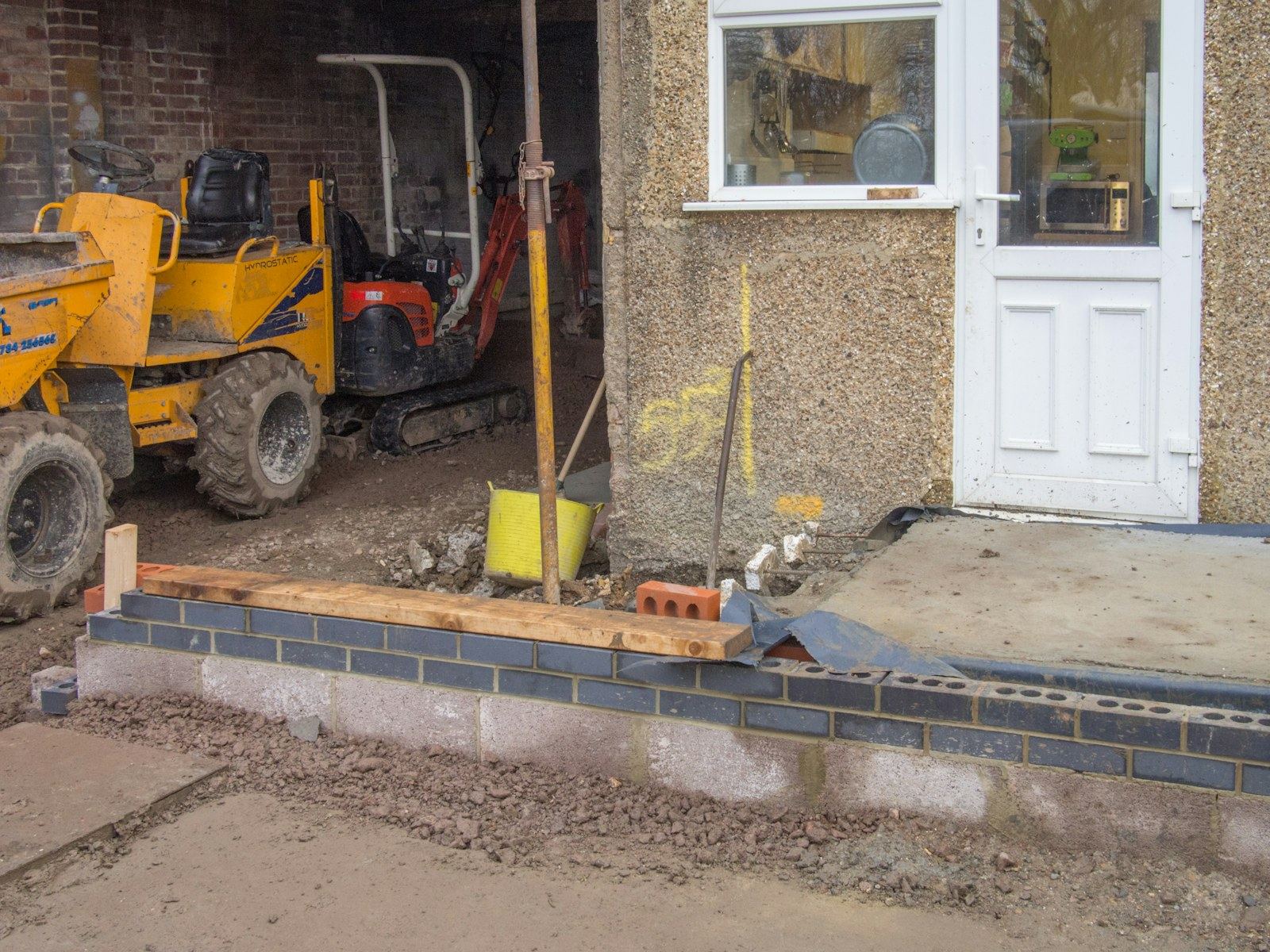
Why walls crack when the ground shifts
When the soil beneath a house loses volume or compresses unevenly, the foundations settle. That movement travels up through the brickwork and plaster, leaving visible marks that tell you something has changed underneath your home.
- 1
Diagonal cracks near windows
Cracks wider at the top than the bottom often follow mortar lines. They can mean one section of wall has dropped relative to another.
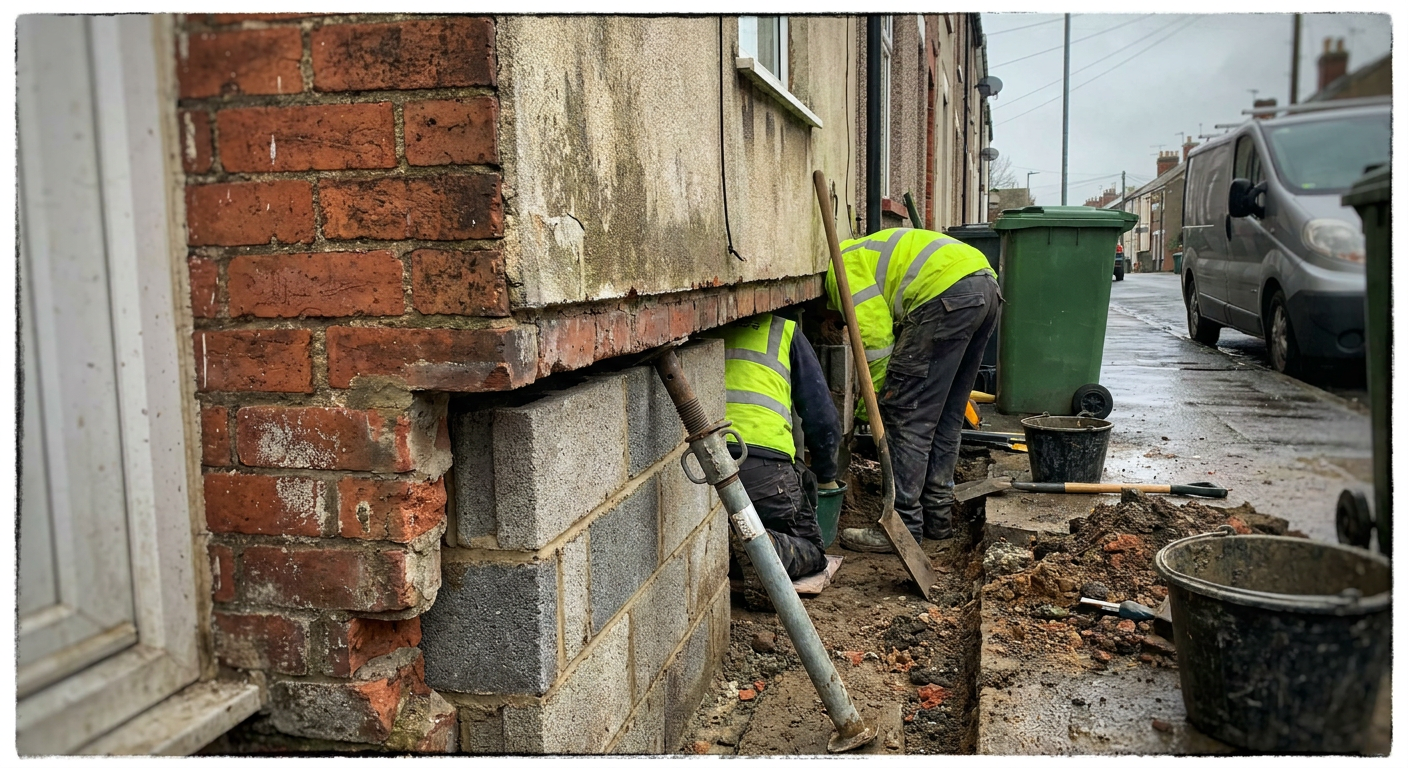
- 2
Doors catching on frames
A door that used to swing freely now sticks or scrapes. The frame may have twisted slightly because the floor beneath it has moved.
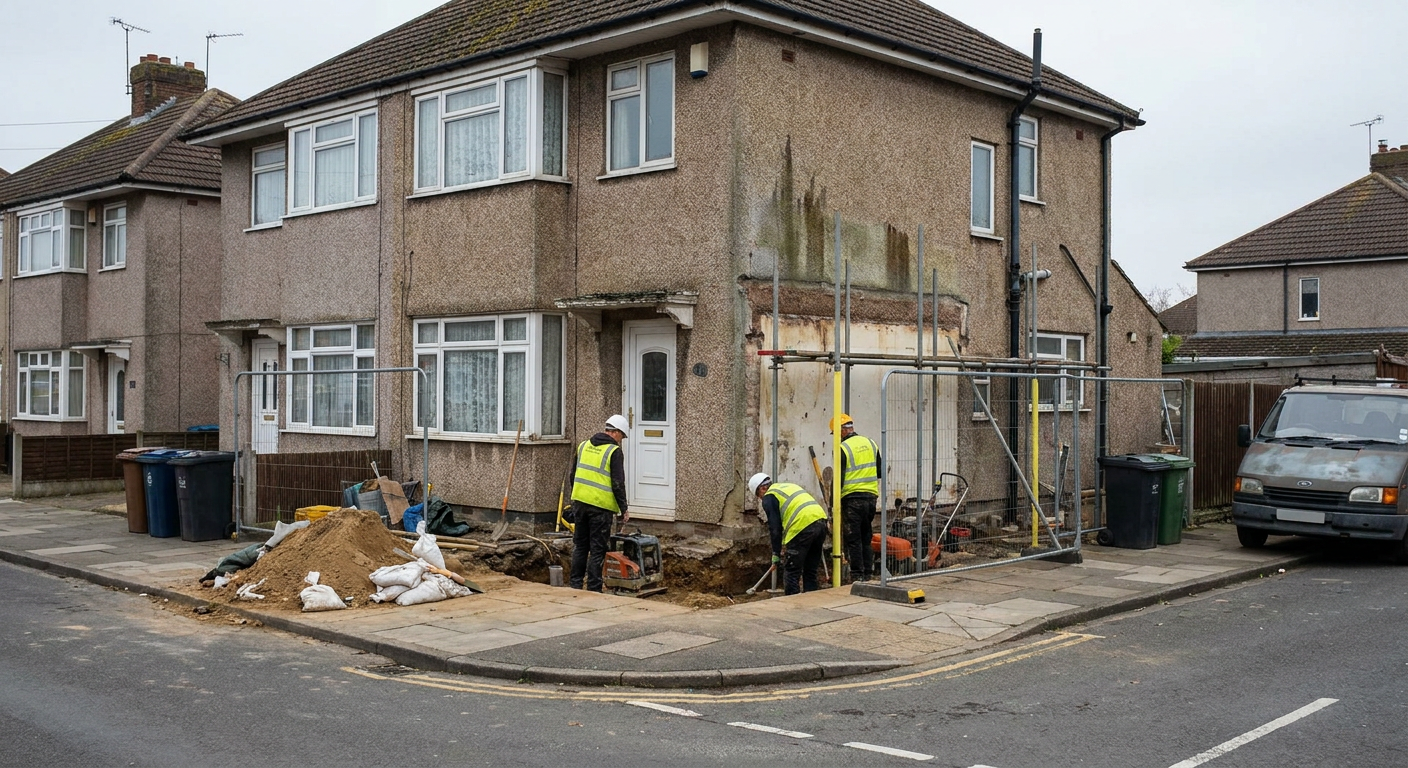
- 3
Gaps around skirting boards
A visible space between the skirting and the floor suggests the wall or the floor has shifted enough to separate them.
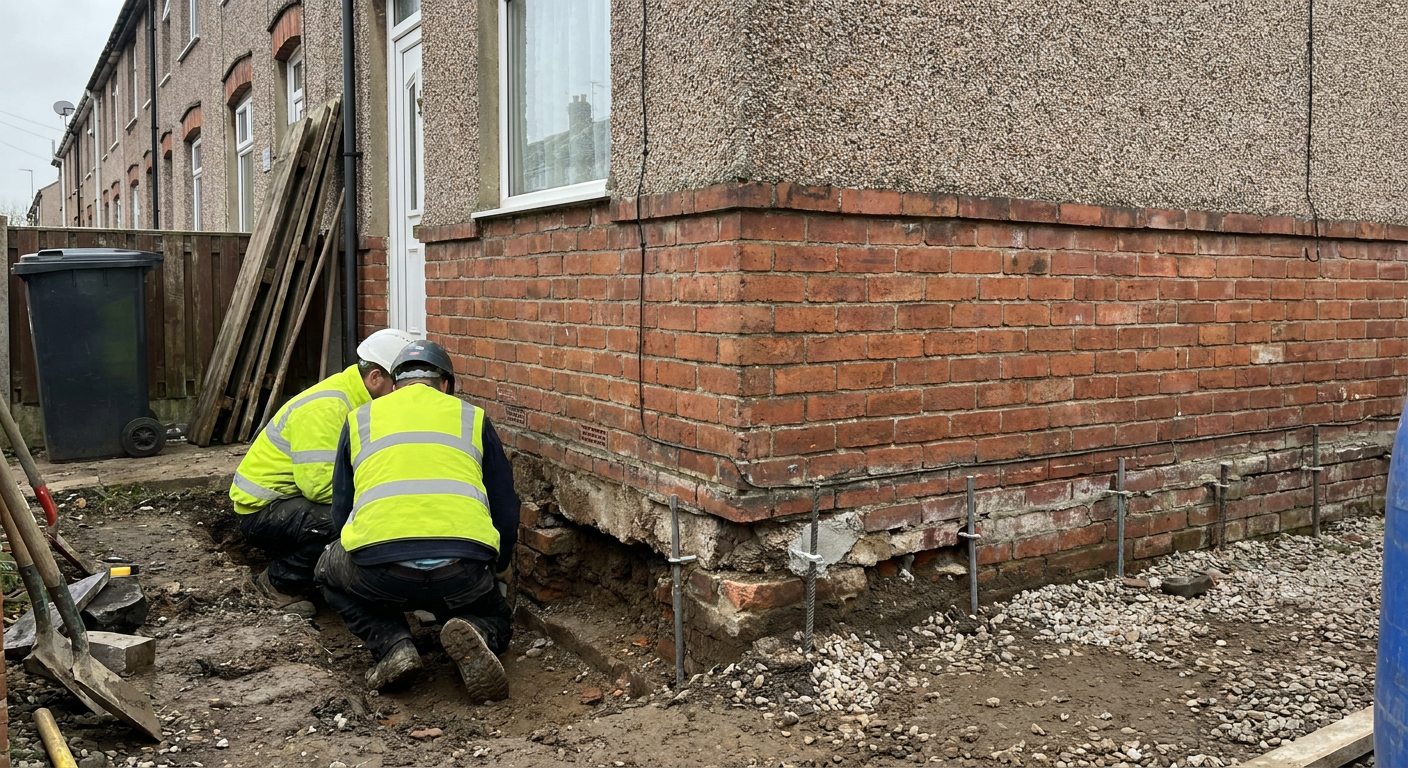
Stages of a resin injection job
The specialist follows a fixed sequence so the ground is treated evenly and the building responds safely.
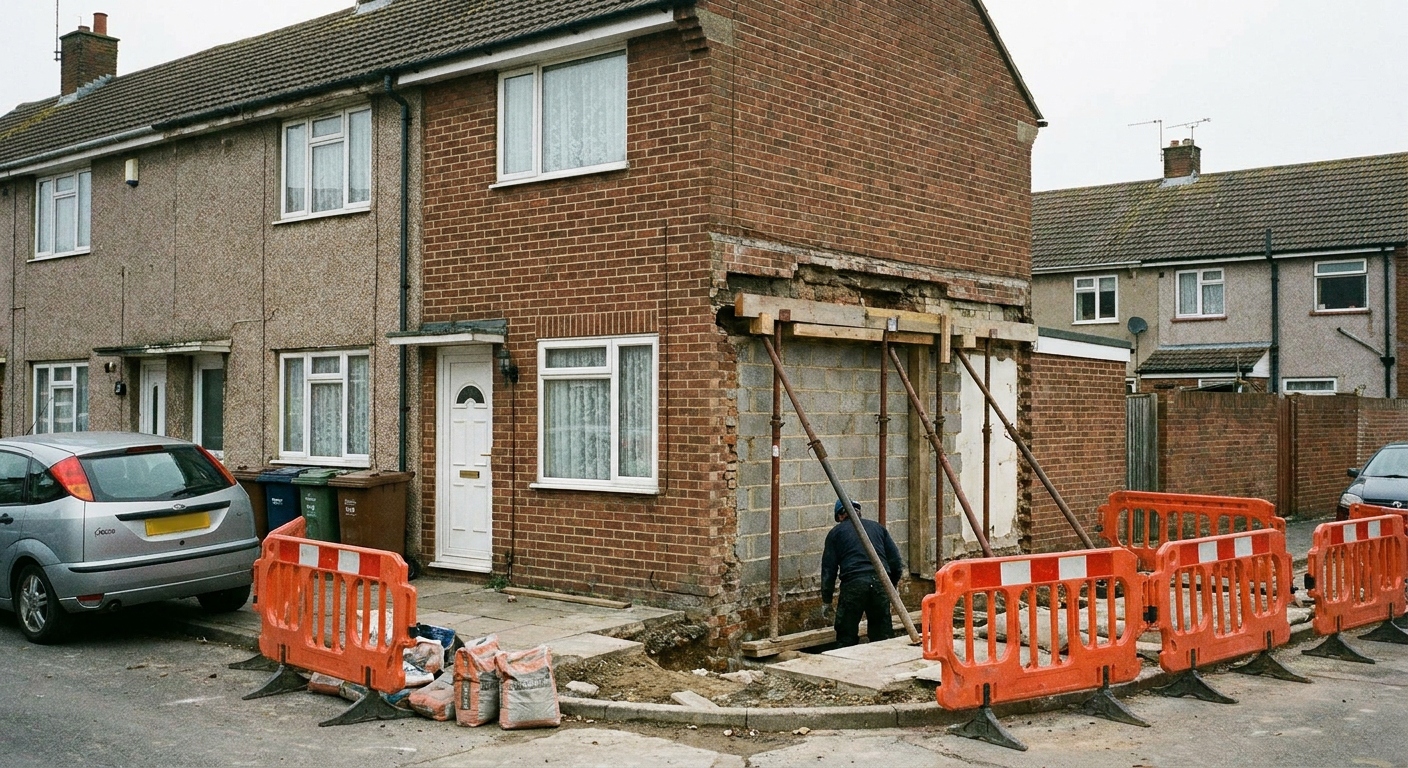
Ground assessment
The specialist examines soil samples and foundation depth to confirm whether geopolymer resin will bond correctly with the earth.
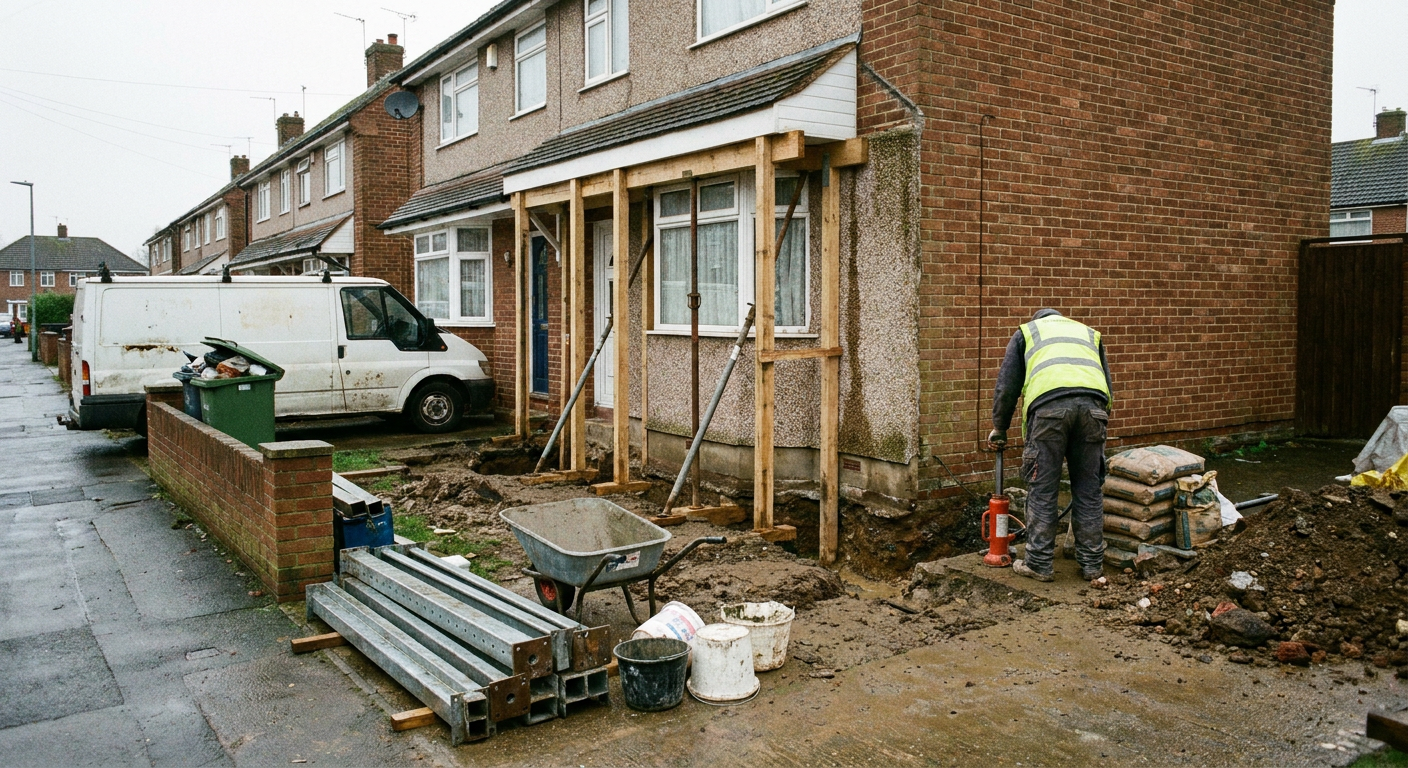
Drilling access holes
Small diameter holes are drilled through the slab or beside the footing at measured intervals along the affected wall.
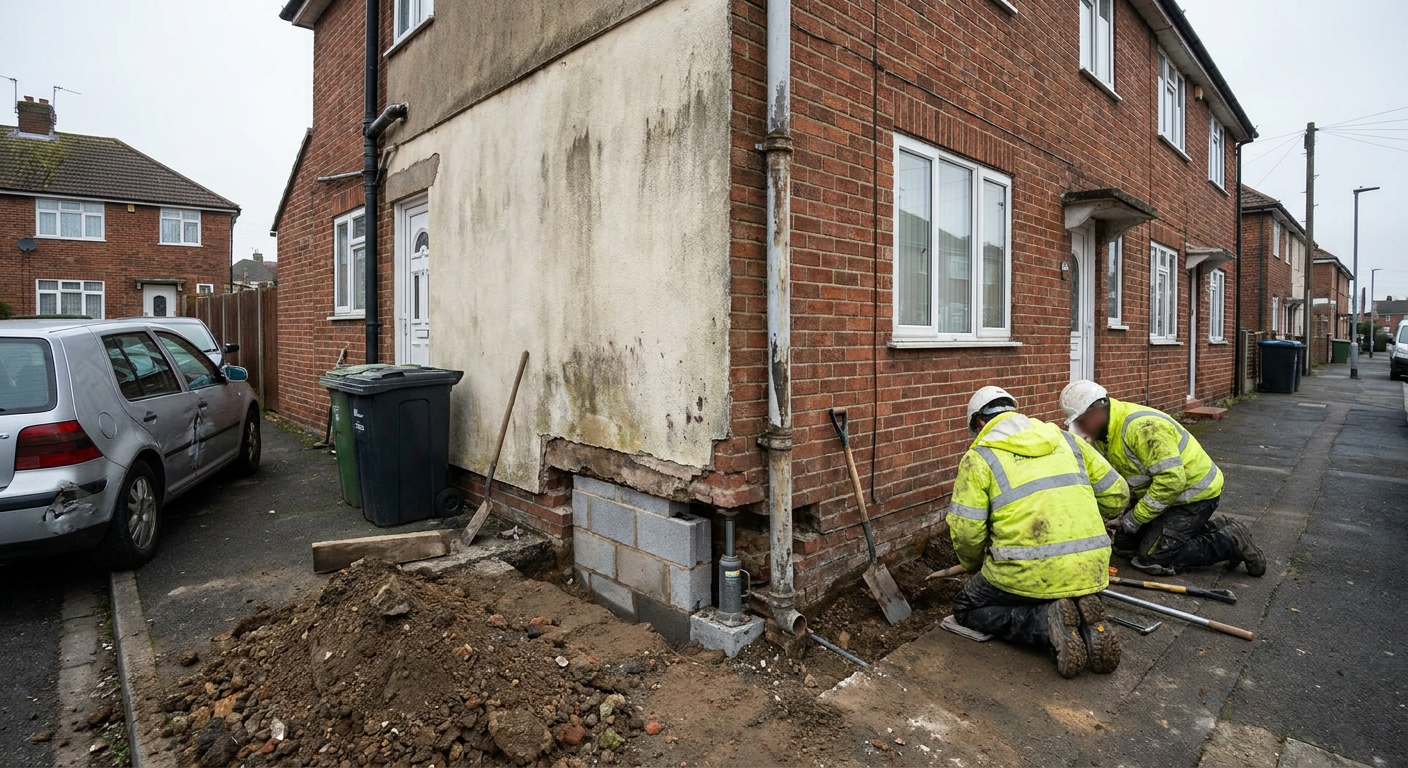
Injecting the resin
Geopolymer resin is pumped into the voids. It expands within minutes, compacting loose soil and filling gaps beneath the footing.
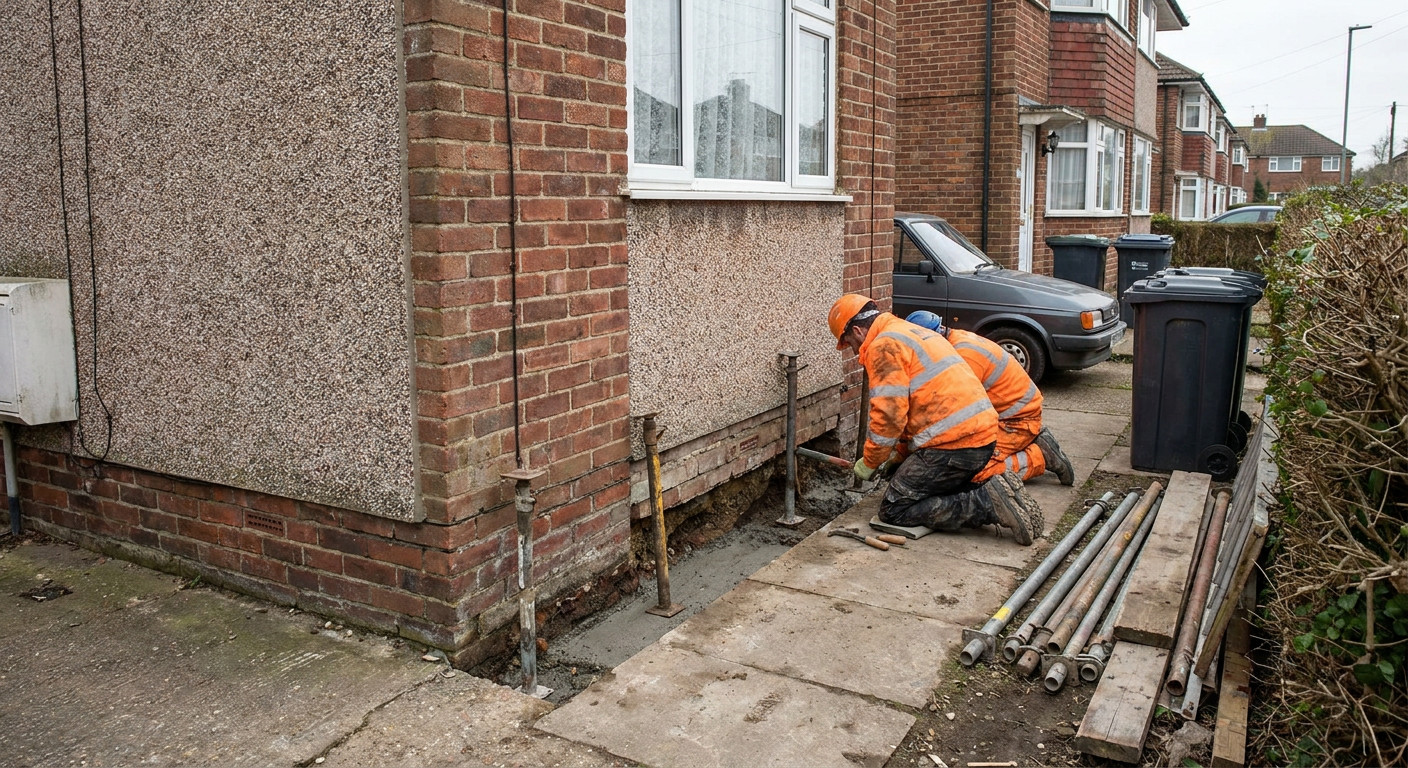
Checking levels
Laser equipment monitors the wall position during injection so the specialist stops precisely when the target level is reached.
Foundation repair options in Southampton
Resin suits some homes but not all. A specialist picks the method after examining the ground, which is why several approaches exist for foundation repair in Southampton.
-
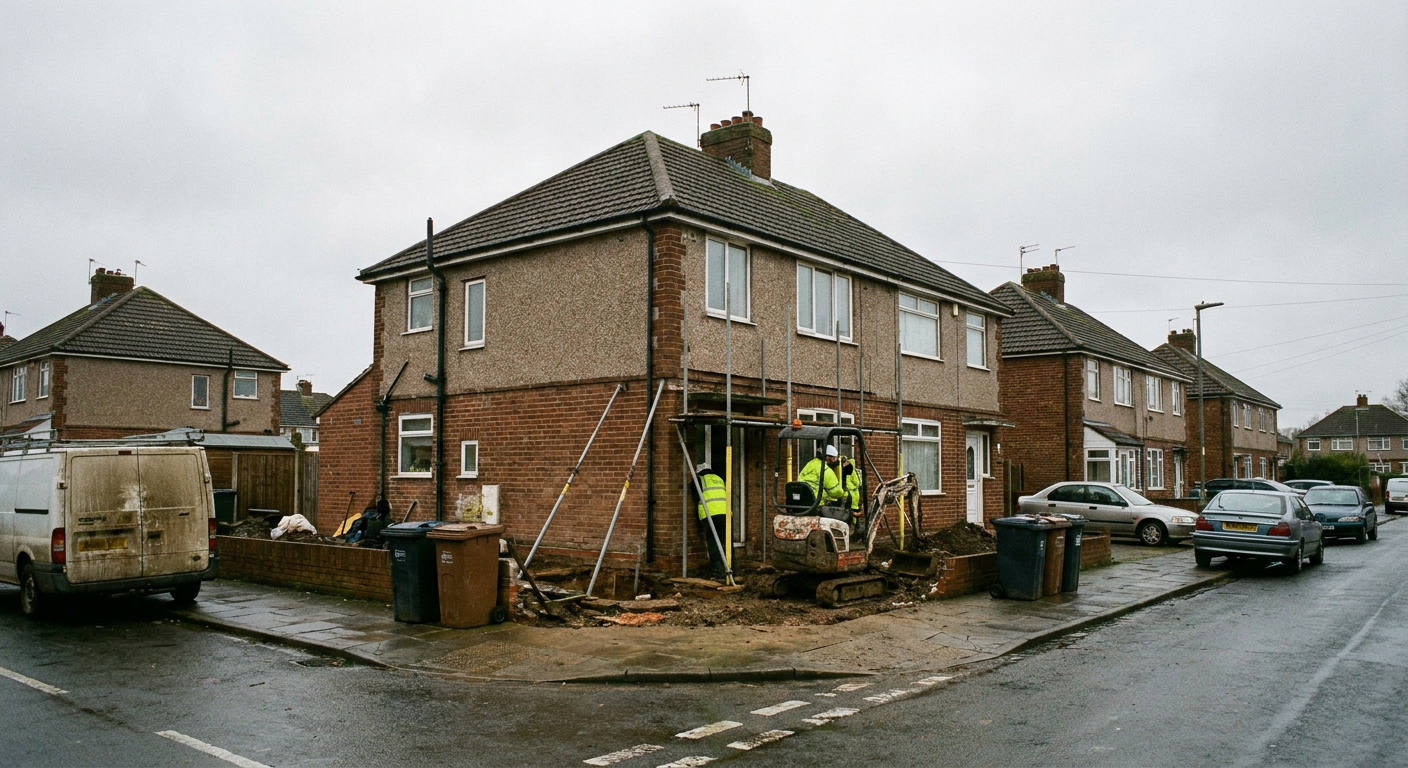
Subsidence survey
Before any ground treatment begins, a specialist carries out a subsidence survey to establish exactly how far the foundations have moved and why. Soil samples, drain tests and level measurements determine whether the problem is active or historic. You receive a written report stating the cause and the recommended remedy. If geopolymer resin foundations in Hampshire are viable, the report says so. If the clay is too soft or the load too heavy, it recommends mass concrete or mini piling instead.
-
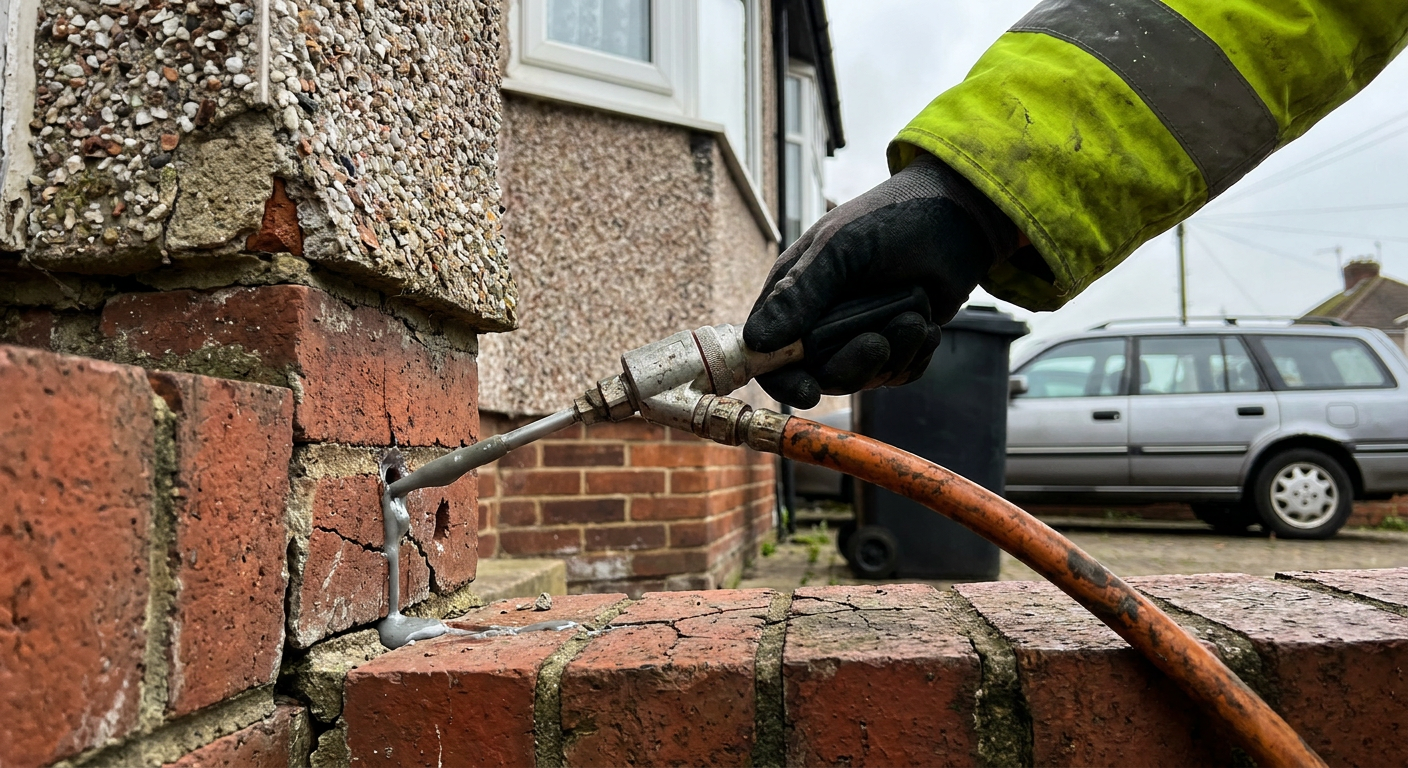
Mass concrete underpinning
Where the soil cannot support resin injection for subsidence, a specialist excavates bays beneath the existing footing and fills them with concrete. This traditional method transfers the weight of the house to deeper, firmer strata. It involves more digging and takes longer than resin work, but it remains the right choice for heavier buildings or sites where the ground conditions rule out a non invasive foundation repair approach. The specialist sequences the bays so the wall stays supported throughout.
-
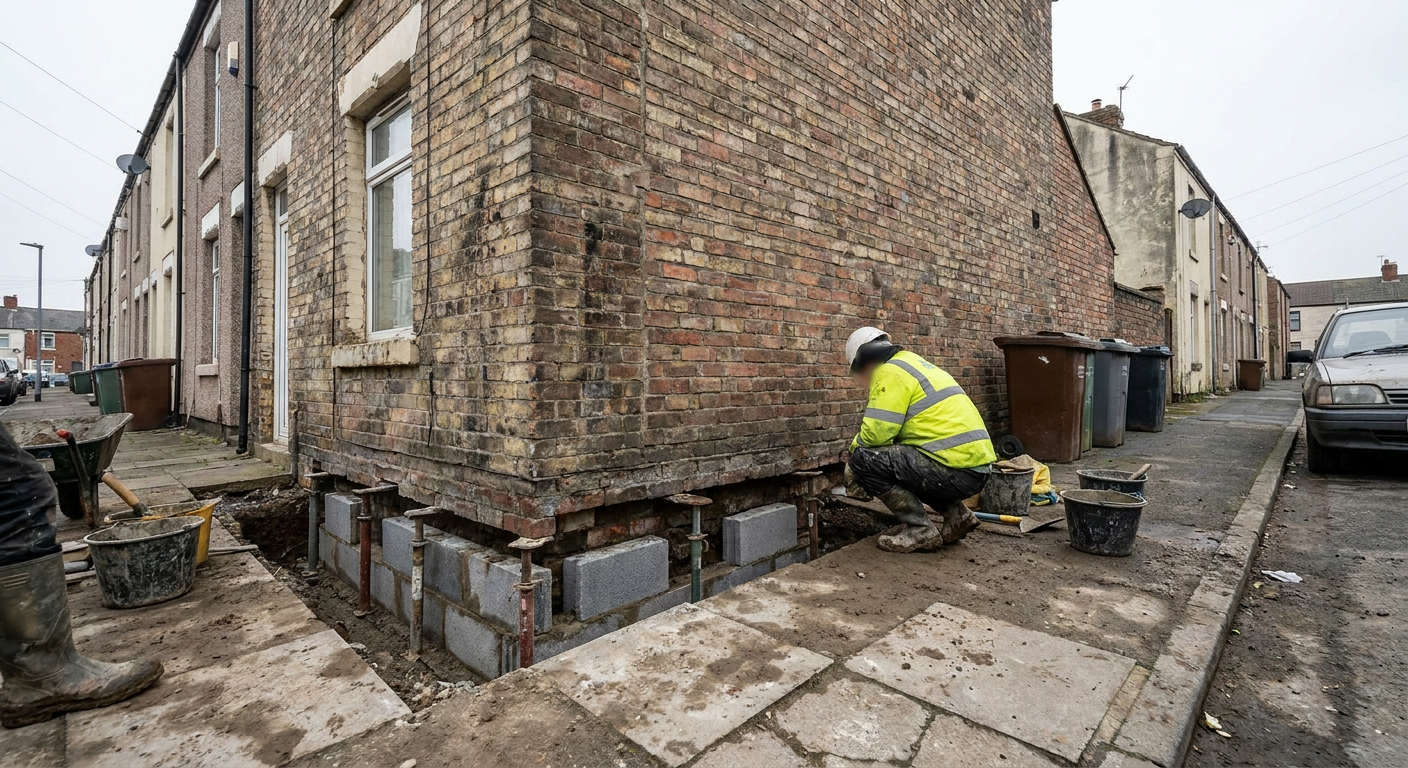
Structural monitoring
After resin injection or any other stabilisation work, a specialist installs monitoring points to track whether the wall continues to move. Readings taken over weeks or months show if the ground has settled permanently or if further intervention is needed. You get recorded data rather than guesswork, which matters for insurance claims and future sales. Monitoring also confirms when it is safe to replaster and redecorate without risking new cracks.
Questions about resin ground injection
Straight answers to the things homeowners ask most. Take other questions to the advice pages. More advice.
- Is resin injection suitable for my house or does the ground have to be a certain type?
- The soil dictates everything. Geopolymer resin needs ground it can compact and bind with, typically granular or lightly cohesive soils. Heavy, saturated clay often rules it out. A specialist takes samples first to confirm whether this alternative to underpinning in Southampton will actually hold your home's weight long term.
- How much does resin injection cost compared with traditional underpinning?
- Resin ground injection cost is usually lower because there is no bulk excavation, skip hire or concrete delivery. Exact figures depend on the length of wall affected and how deep the treatment goes. A specialist prices the job after the initial survey, so you compare like-for-like quotes based on your actual ground conditions.
- How long does a resin injection job take and can we stay in the house?
- Most residential jobs finish within one or two days. Because the work happens through small drilled holes rather than open trenches, you can normally remain at home. The specialist will advise if any room needs clearing for access, but disruption is minimal compared with conventional underpinning.
- What does the specialist check before deciding resin is the right approach?
- They examine borehole logs, moisture content, foundation depth and proximity to drains or tree roots. If the bearing capacity is too low or voids are too large, resin alone will not stabilise the structure. Those findings, not a preference for speed, decide whether the specialist recommends resin or another method.
- Will resin injection be accepted by my insurer and my mortgage lender?
- Insurers and mortgage lenders generally accept resin injection for subsidence when a chartered structural engineer has specified the method. The specialist contractor completes the work to that specification. Ask your insurer or lender what documentation they require before any work begins, as some request the engineer's report alongside the contractor's completion certificate.
- Does the garden or driveway get dug up, and what is left behind afterwards?
- Access holes are roughly 20mm wide. Drilling through a path or lawn leaves small patches that are filled with grout or sand once the resin sets. There are no open trenches, so hard landscaping and planted beds stay largely untouched.
- What happens if the checks show resin is not suitable for my foundations?
- The specialist recommends a method that matches the ground. That might mean mass concrete underpinning for shallow failures or mini piled underpinning where stable strata lie several metres down. You get a solution engineered for your soil, not a compromise.
- How soon after the work can we redecorate the cracked walls?
- Specialists generally advise waiting three to six months after stabilisation. The building needs time to acclimatise so any residual hairline movement finishes before new plaster or paint is applied. Structural monitoring during that period confirms the wall has stopped shifting.
Areas covered around Southampton
Enquiries are taken for homes across Southampton and the surrounding Hampshire towns. Separate specialist firms carry out the ground investigation and resin injection work in each area listed here.
If your street is not mentioned, send an enquiry anyway. Coverage extends beyond these named places.
Ask about resin injection for your home
Send the details of what you have noticed. A specialist firm reviews the information and replies with the next steps. There is no obligation to proceed and no fee for the initial enquiry.
- No obligation
- Local specialists
- Free initial review