Describe what you have noticed
Resin injection, Hedge End
A crack above the patio doors or a sticking window frame means the ground under your home has shifted. Resin injection in Hedge End addresses movement where shallow foundations sit on shrinkable clay. Send an enquiry to find out what the damage means.
- No need to move out during the work
- Suitable for 1980s shallow foundations
- Stabilisation without full excavation
The problem
Why newer homes in Hedge End settle on clay
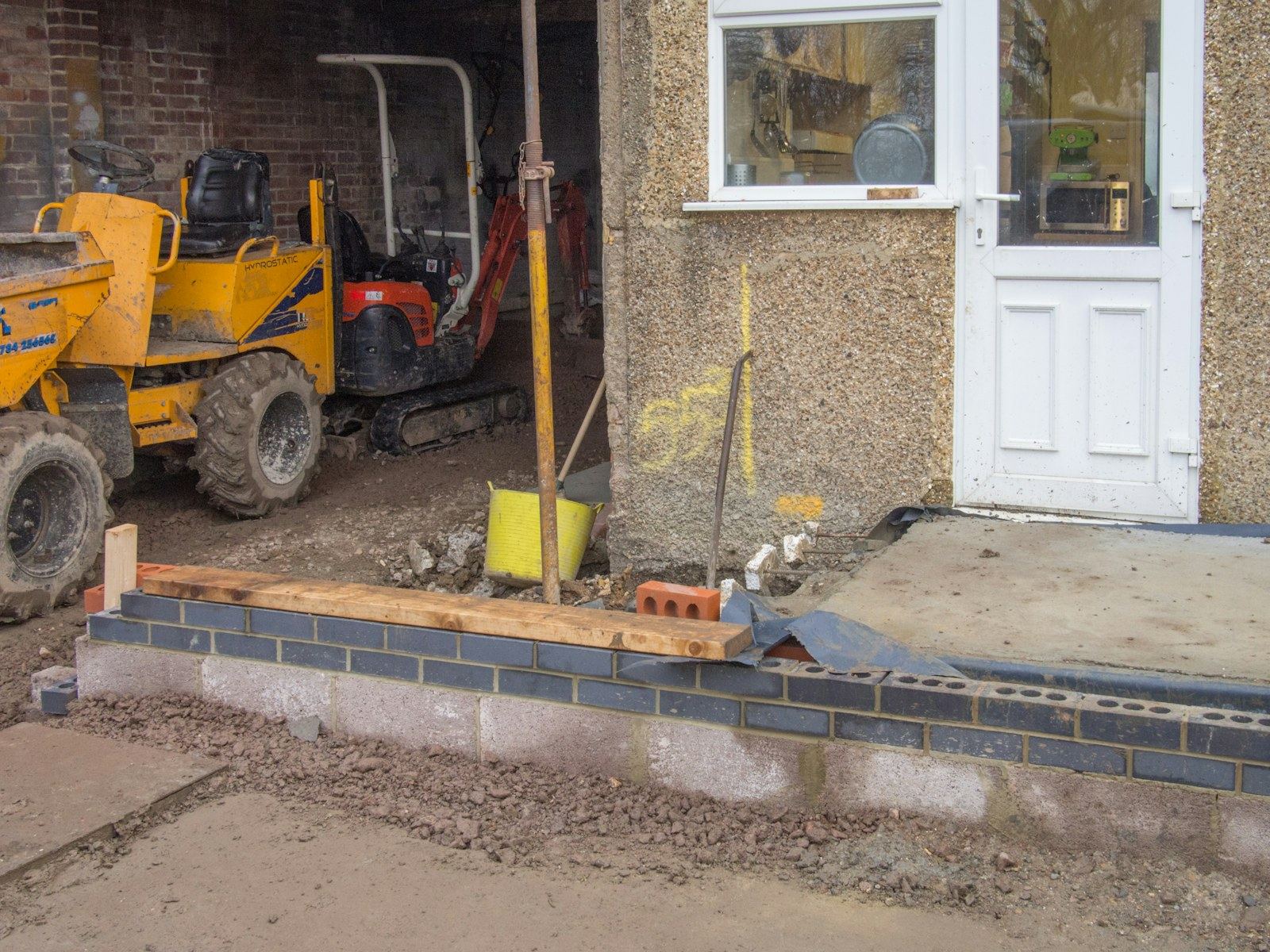
Most houses here were built after 1919, often with shallow strip foundations resting directly on clay-with-flints. When the soil shrinks in dry weather, those footings drop and cracks open above door frames.
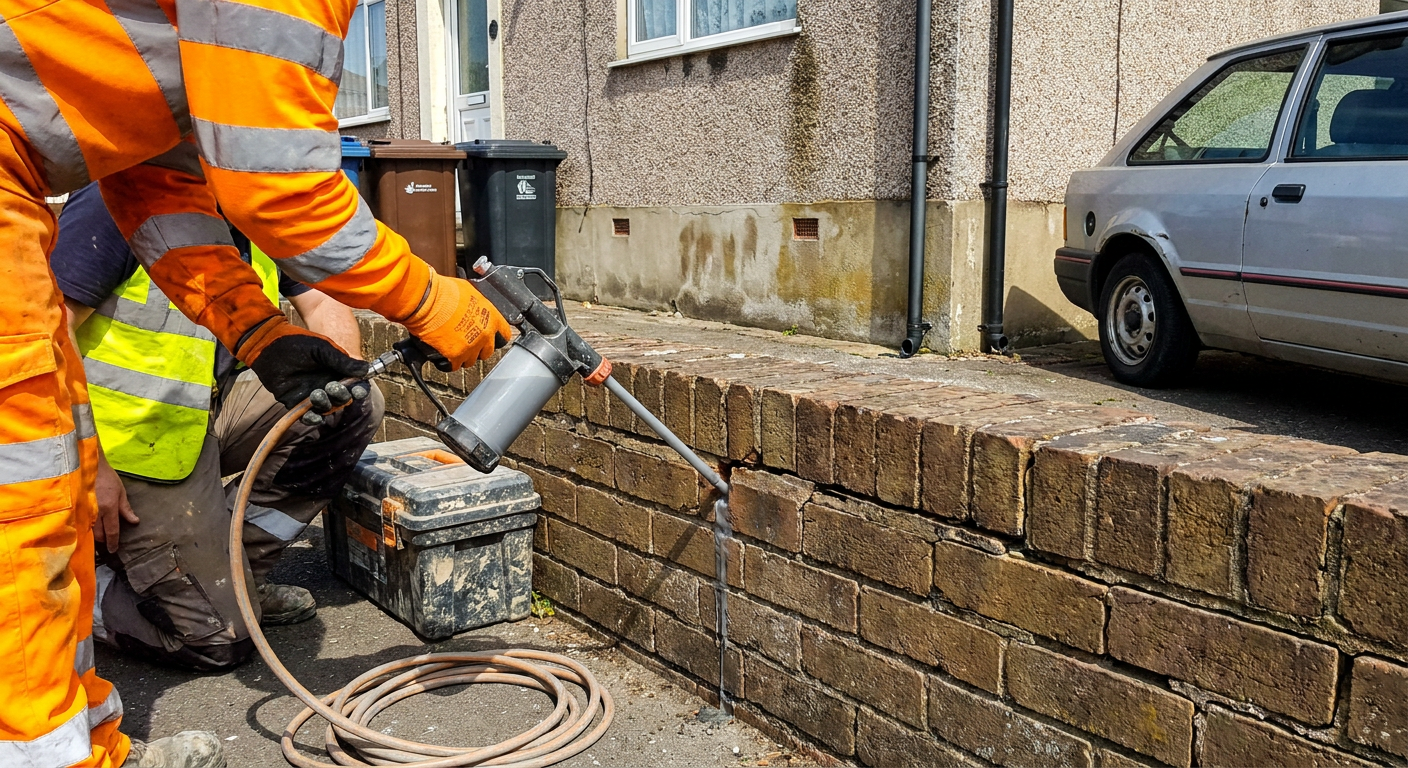
Geopolymer injection fills voids beneath the footing and compacts loose material. The resin expands as it cures, lifting settled sections back toward their original level without digging a trench along the wall.
Clay soil foundation repair across Southampton follows the same principle. A specialist firm drills small holes through the slab or alongside the footing, then pumps the material in under controlled pressure.
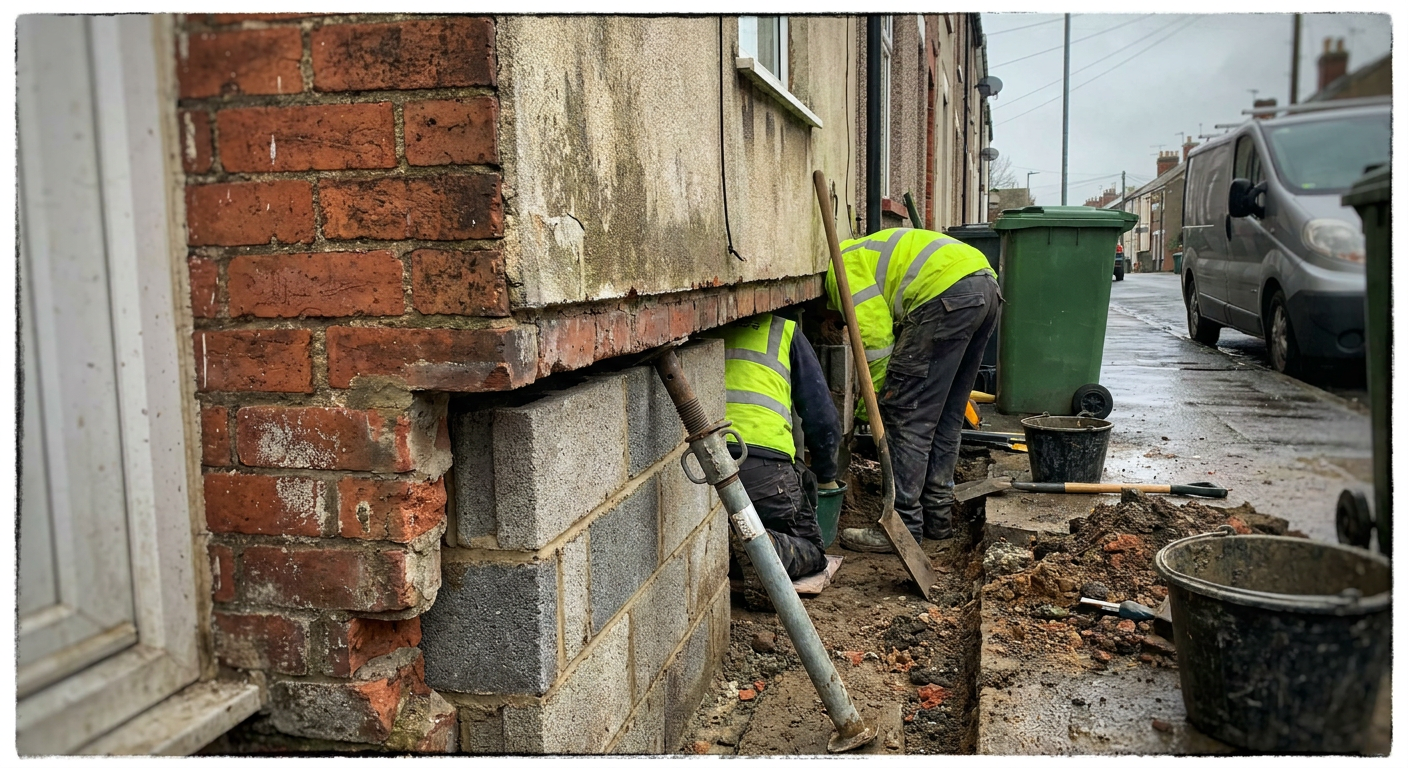
Cracked walls on shallow foundations in Hedge End rarely need mass concrete underpinning if the movement is caught early. Subsidence repair in Hampshire starts with measuring how far the brickwork has dropped.
Resin injection coverage around Hedge End
Enquiries from Hedge End are handled in the same way as those from anywhere else near Southampton. Details about the house go to a specialist firm that carries out ground stabilisation injection locally. Read more about subsidence help in Hedge End before sending anything.
- Clay-with-flints geology
- Superficial clay over Reading Beds creates perched water tables. Trench excavations flood quickly unless pumped, making resin preferable to open dig methods.
- Post-1919 housing stock
- Only 6.6 percent of homes predate 1919. Shallow footings on newer builds respond well to resin rather than deep piling.
Resin injection compared with mass concrete
Both methods stop movement, but they suit different depths of foundation and types of soil.
Excavation needed
- Resin injection
- Small drilled holes only; no trenching along the wall.
- Mass concrete underpinning
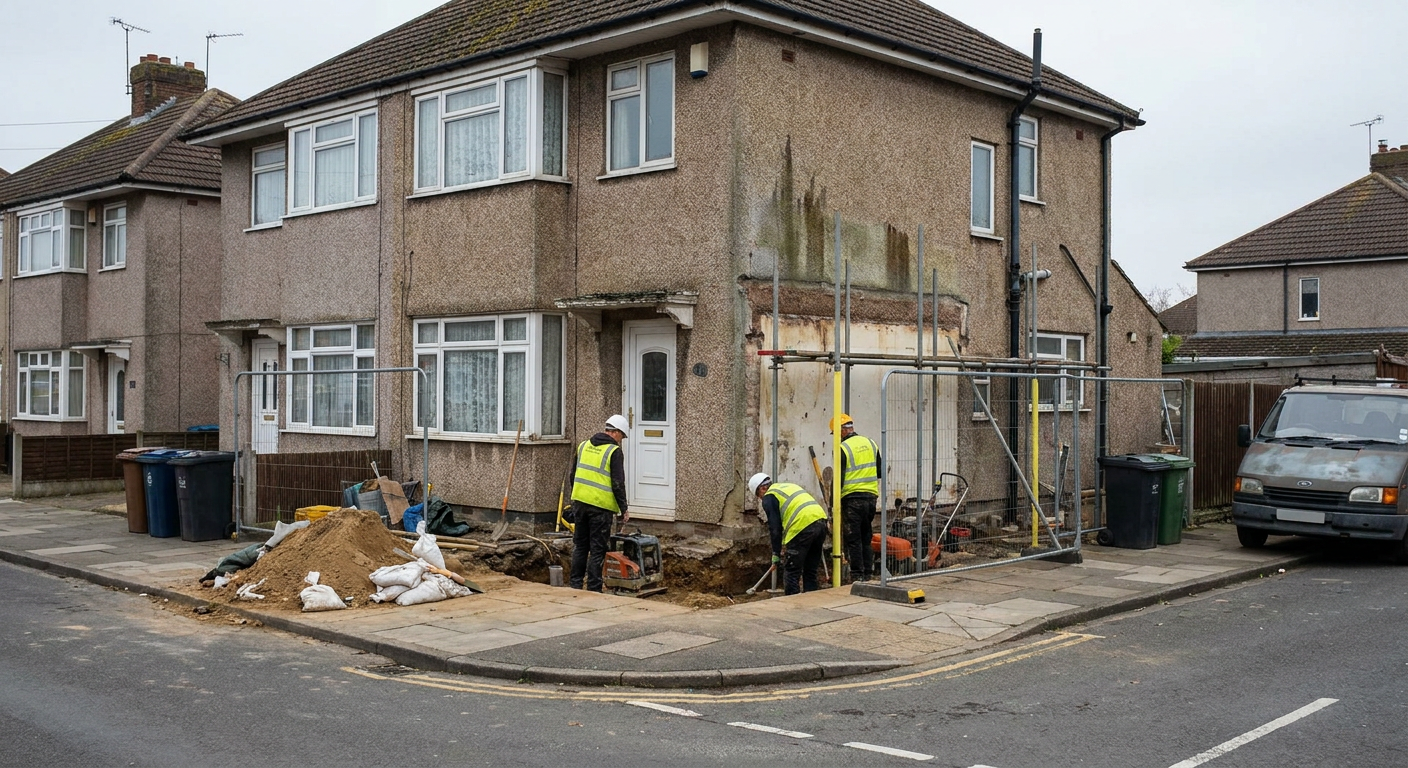
- Trenches dug below the existing footing in stages.
Time on site
- Resin injection
- Usually completed within a day for a single wall.
- Mass concrete underpinning
- Takes several days because each bay must cure before the next opens.
Disruption inside
- Resin injection
- Work happens from outside or through the floor slab.
- Mass concrete underpinning
- Internal floors may need lifting where trenches run beneath them.
Soil type
- Resin injection
- Compacts loose fill and stabilises shrinkable clay directly.
- Mass concrete underpinning
- Replaces weak soil with concrete bearing on a firmer stratum.
A specialist advises which method suits after examining the foundations and the soil.
What you receive after the survey
A structural survey produces a written record of the damage and a clear recommendation. You get documents that explain what is happening under your home and what the specialist firm intends to do about it.
- Condition report
- Notes every visible crack, measures their width, and records whether doors and windows still close properly.
- Cause assessment
- Identifies whether clay shrinkage, drain leaks, or tree roots are driving the movement so the right fix is chosen.
- Method statement
- Sets out where holes will be drilled, how much resin is expected, and what monitoring should follow the work.
Common questions about resin injection
Knowing what to expect helps you decide whether to send an enquiry or arrange a survey first.
Living at home
- Moving out
- You can stay home. There is no heavy digging and noise is limited to drilling.
- Timeline
- Site visit to last injection takes a few weeks. Decorate once filler cures.
- Drives and lawns
- Tubes pass through small holes. Drives rarely need lifting unless beneath them.
- If cracks return
- Monitoring tracks movement. If shifting continues, piling is the fallback.
Costs and insurance
- Moving out
- Resin ground injection cost is priced per point, not per wall, by volume used.
- Timeline
- Buildings insurance may cover it if subsidence is proven. Leaks differ.
- Drives and lawns
- A survey separates clay shrinkage from root damage or broken drains.
- If cracks return
- Pins tell the specialist whether the resin held or the clay still moves.
A specialist answers these questions for your specific home after inspecting the site.
Tell us what you have noticed at your home
Send the details of the cracks or sticking doors. There is no charge for the initial enquiry, and a specialist firm will review what you describe before suggesting next steps.
Send your enquiry