Home guide
Why are my doors sticking and windows jamming?
Doors binding, gaps above skirting boards and a dropped bay window can all point to ground movement beneath your home. Find out what each sign means, when damp weather is the simpler explanation, and when it is worth having a specialist look.
When internal doors stop closing properly
If you are asking why are my doors sticking, start by looking at how many are affected. A single door that rubs its frame after a wet spell might just be swollen timber. Southampton sits on varied ground, from clay around Bassett to river gravels near Redbridge, and moisture changes the size of wooden doors.
But if internal doors are not closing properly in several rooms at once, the problem is unlikely to be the wood. When multiple frames go out of square together, something has shifted beneath them. That points toward the foundations rather than the weather. Binding across a hallway and a bedroom at the same time is one of the early signs of subsidence in a house.
A specialist surveyor will check whether the frames have distorted because the walls carrying them have moved. They measure the diagonals of the opening to see if it has become a parallelogram. If it has, the cause is usually below ground level.
Gaps appearing between the skirting and floor
A gap under a skirting board has more than one possible cause. Sometimes a floorboard shrinks as central heating dries it out over winter. But if the space runs along a whole wall, or appears in several rooms, the floor itself may be dropping away from the wall plate.
In older homes around Sholing or Thornhill, a floor sloping noticeably towards one corner often means the ground underneath has settled unevenly. The joists follow the dip, and the skirting stays fixed to the wall, leaving a visible line of daylight between the two.
This does not always mean urgent structural failure. Some settlement happened decades ago and stopped. But a new gap that widens over weeks suggests ongoing movement. Recording the width with a ruler and checking it again a month later gives a surveyor useful information about the rate of change. You can read more about tracking cracks and gaps before a visit.
A bay window that looks like it has dropped
Bay windows project beyond the main wall line, so they rest on their own small section of foundation. That makes them vulnerable. If a bay window is dropping in your Southampton home, the shallow footing beneath it may be sinking into softening soil.
Clay soils shrink during dry summers and swell when rain returns. Trees close to the house draw moisture from the ground, accelerating the shrinkage. Because the bay carries less weight than the main house, it reacts faster to these changes. You might notice the sill tilting, windows jamming because the frames distort, or diagonal cracks running up from the bay corners into the brickwork.
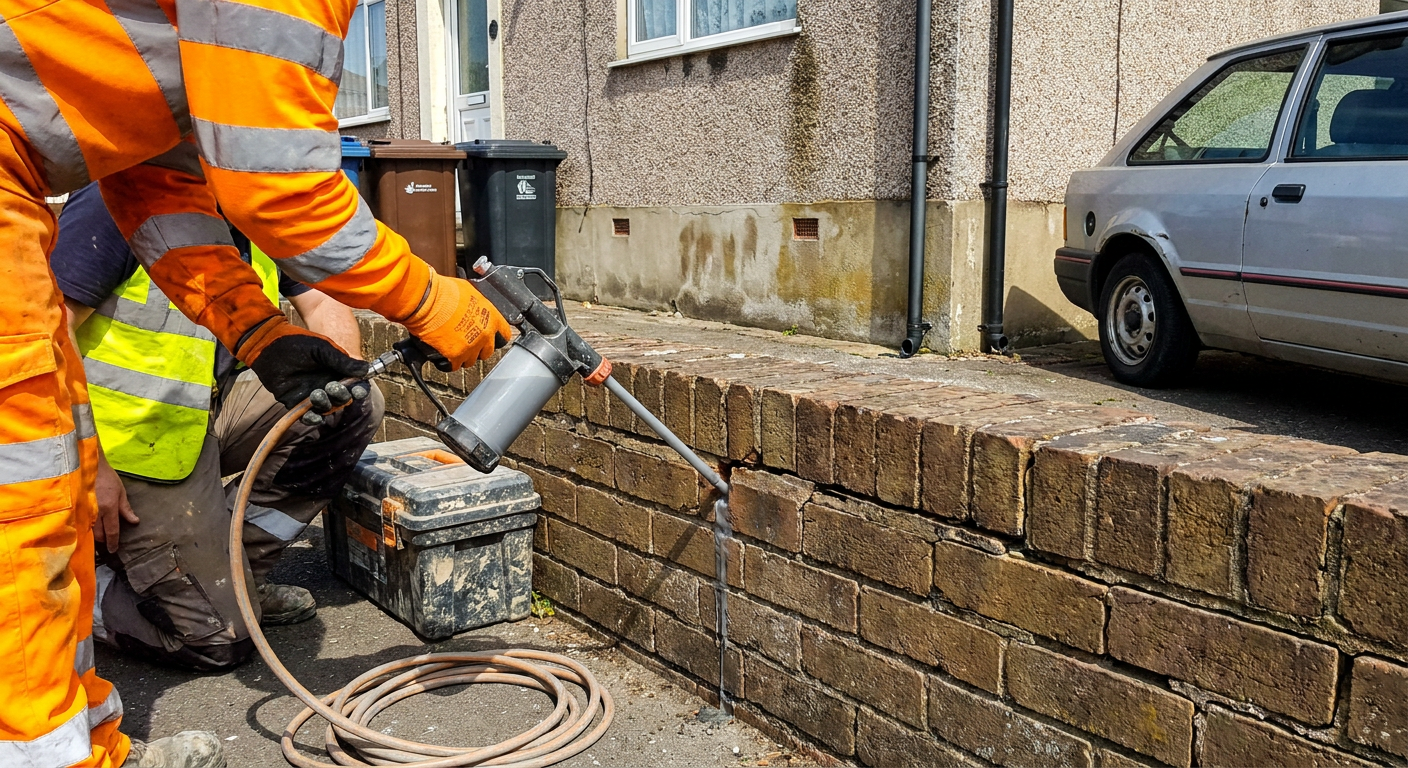
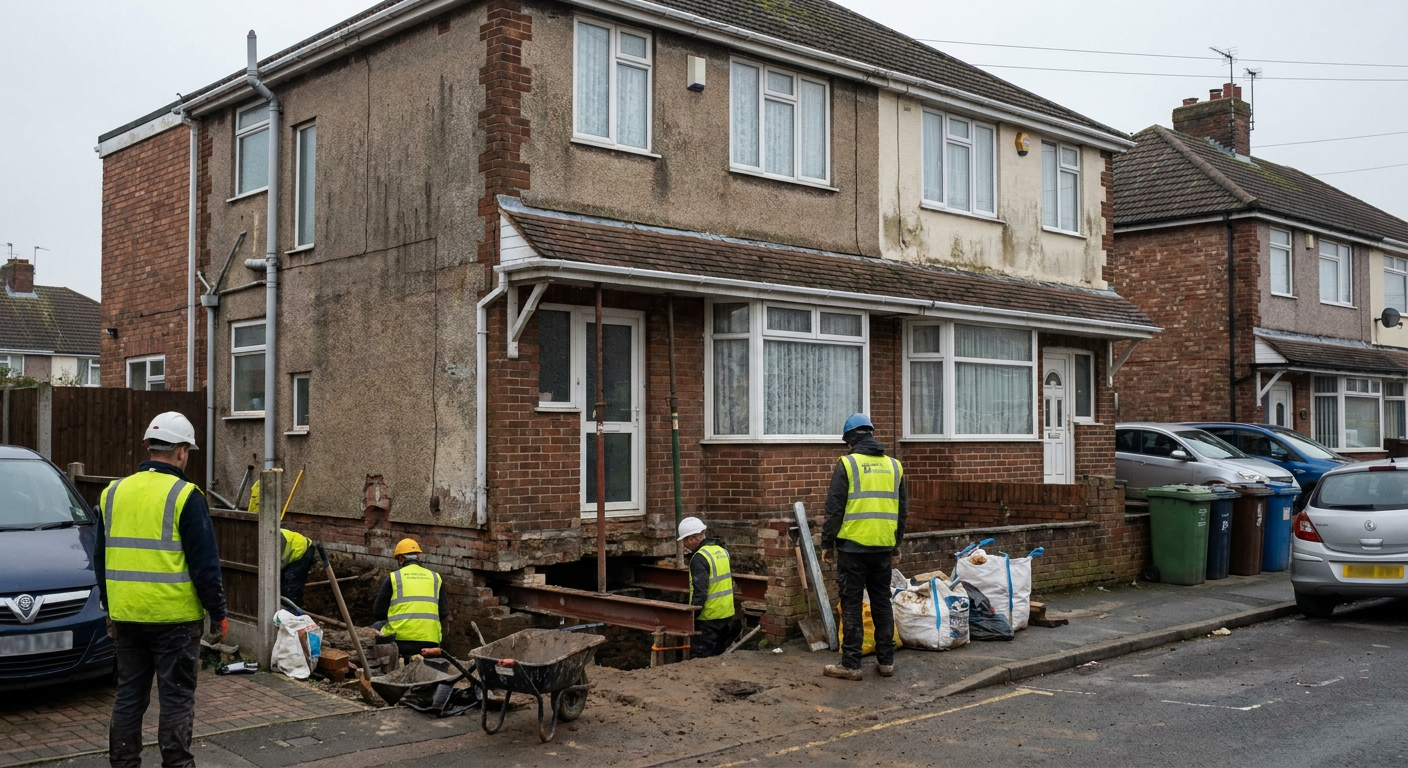
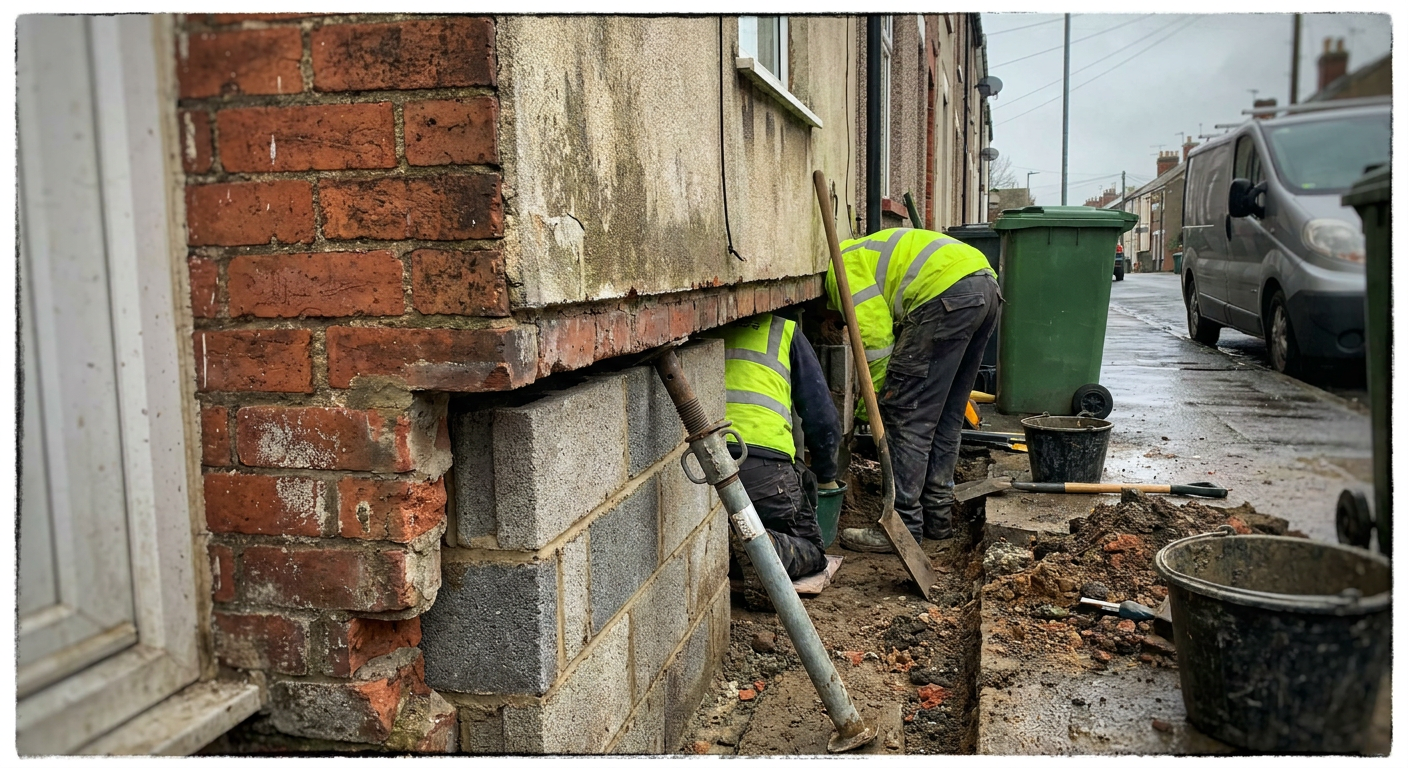
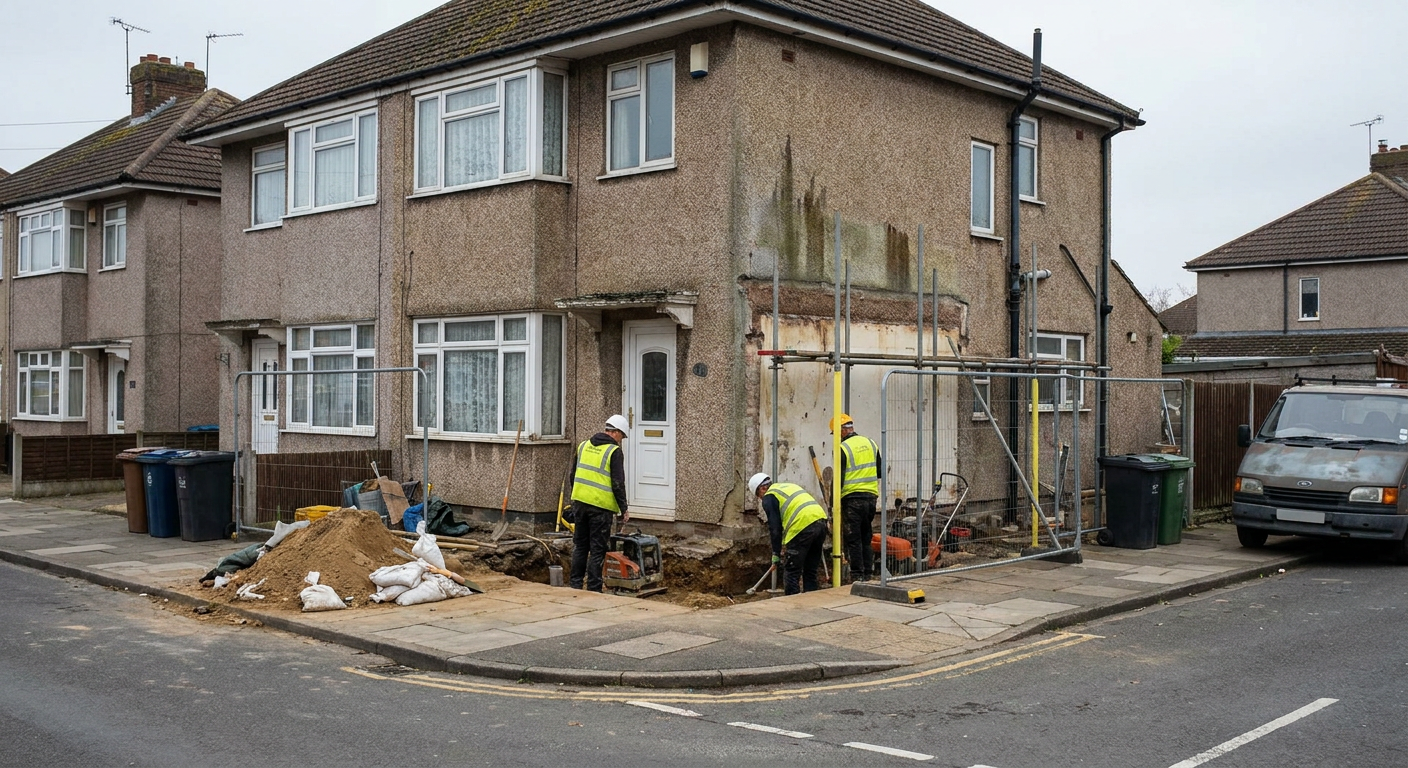
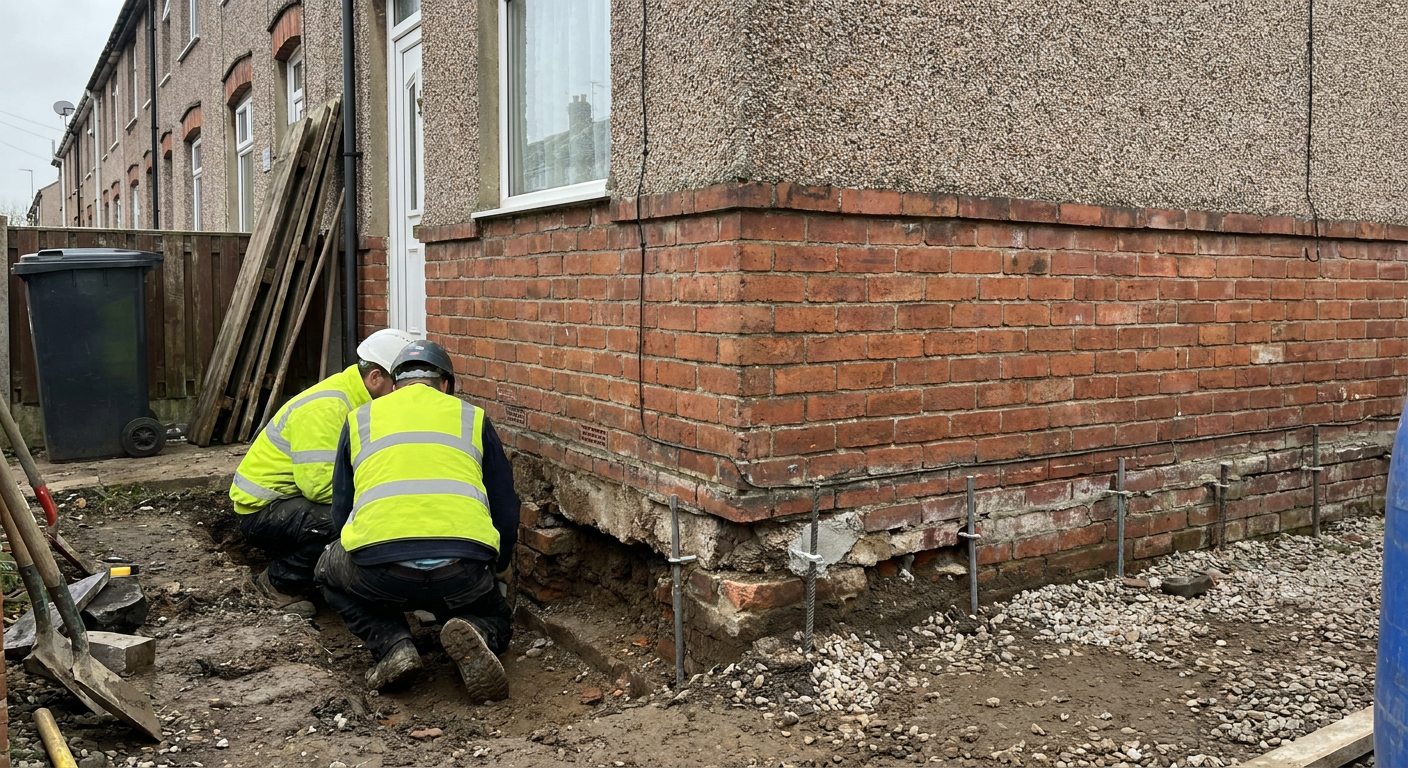
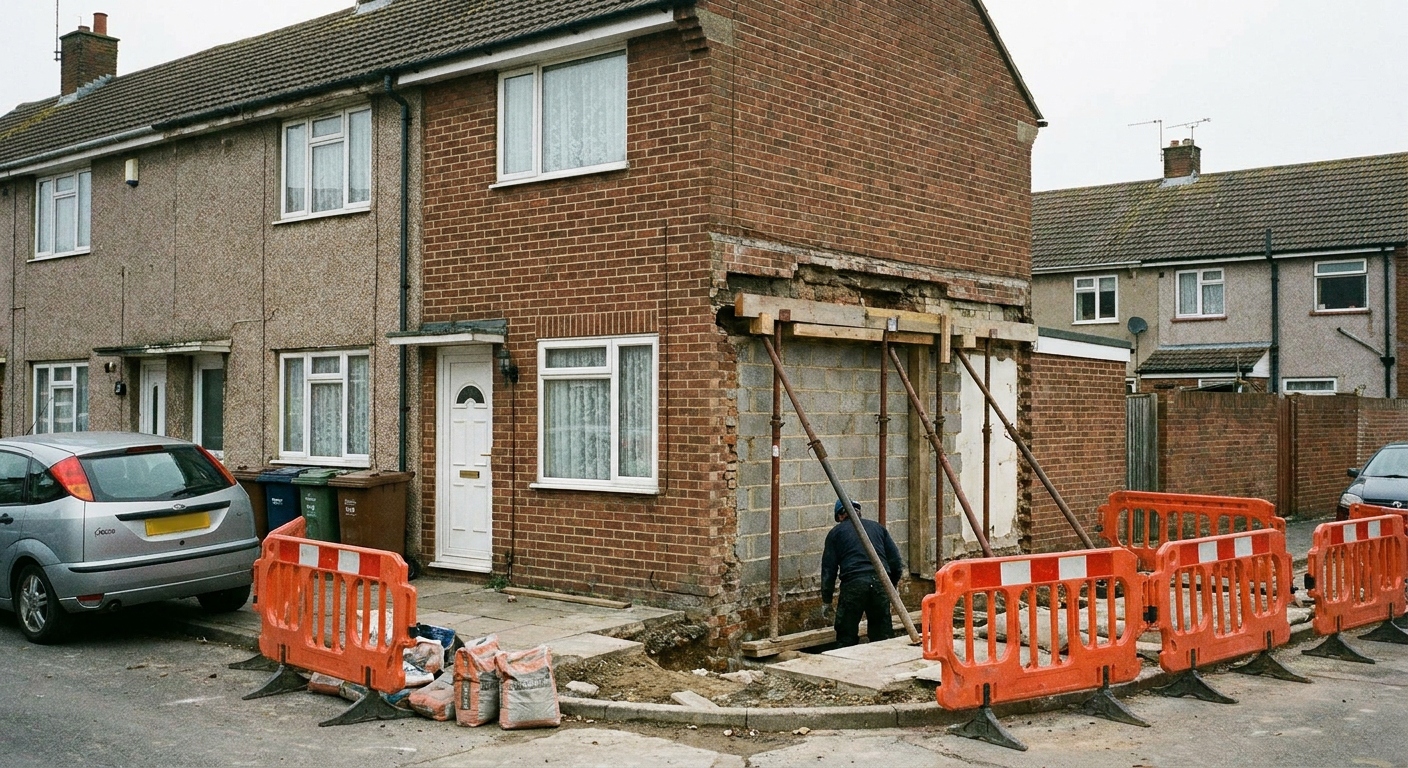
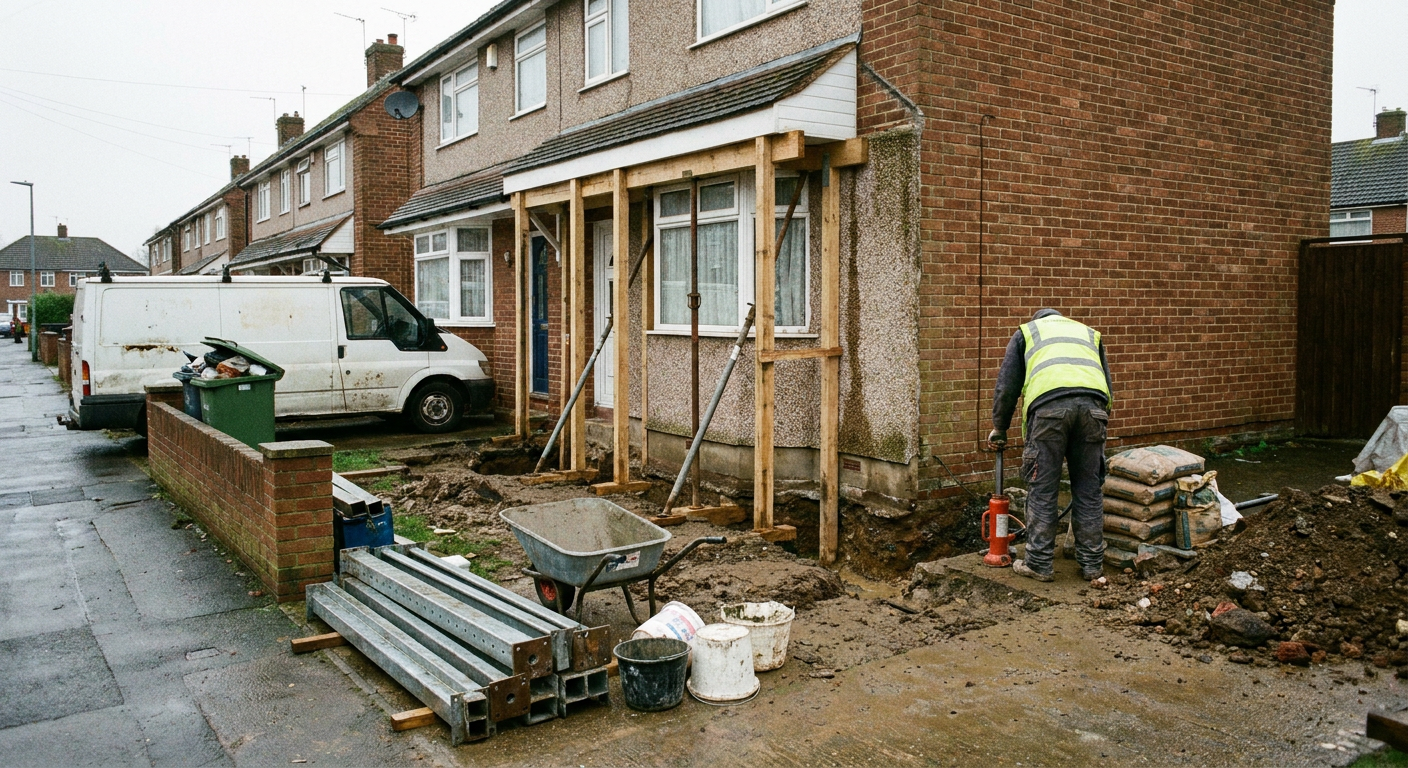
A dropped bay does not repair itself. Left alone, the distortion spreads back into the main wall. Specialist firms use methods such as mass concrete underpinning or resin injection to stabilise the footing beneath the bay without disturbing the rest of the house. The right method depends on the soil type and how far the movement has gone.
Telling damp swelling from structural movement
Southampton weather swings between damp winters and dry spells, so timber naturally expands and contracts. A door that sticks in January and swings free by July is probably reacting to humidity. That is normal.
Structural movement behaves differently. It does not reverse with the seasons. Once a door binds because the frame has shifted, planing the edge might free it temporarily, but the rubbing returns as the ground continues to move. Windows jamming for the same reason will not ease off when the air dries out.
The pattern matters too. Swelling affects exposed timber evenly. Movement distorts specific openings, usually those nearest the source of the problem. If the sticking is limited to one side of the house, or follows a crack you have noticed outside, the cause is more likely to be foundation related. A subsidence survey establishes which of these explanations fits.
When to ask a specialist firm to visit
No single symptom proves subsidence. But certain combinations suggest it is time to have someone look. Doors sticking alongside new cracks wider than a few millimetres, a bay window dropping while floors slope away from it, or gaps opening above skirting boards in more than one room are patterns that warrant attention.
A first visit from a structural surveyor involves measuring levels, checking crack widths and assessing the ground conditions around the home. This initial assessment determines whether monitoring is needed before any repair is planned. Monitoring tracks movement over months so the specialist firm knows whether the problem is active or historic.
If movement is confirmed, the next steps depend on severity. Options range from crack repair and decoration for minor cosmetic damage, through to mini piled underpinning where the ground is too weak for shallow foundations. Most homeowners can stay in the house while this work takes place, though rooms near the repair area will be out of bounds. The specialist contractor managing the job explains the sequence and disruption before anything begins.
Signs your home might be moving
Ground movement shows up in small distortions first. Frames twist, finishes split and surfaces tilt. These are things you can see yourself before calling anyone.
- 1
Doors rubbing on frames
The latch side catches or the top binds. If it happens in several rooms, the frames have likely distorted rather than the wood swelling.
- 2
Gap above the skirting board
A visible line of daylight between the floor and the skirting. It can mean the floor has dropped or the wall has lifted slightly.
- 3
Bay window tilting
The sill slopes outward or inward. Brickwork around the bay may show stepped cracking. Windows in the bay jam shut.
- 4
Diagonal cracks in plaster
Cracks running at roughly forty five degrees from door or window corners. Wider at one end than the other suggests differential movement.
- 5
Floors sloping to one side
A ball rolls consistently in one direction. Furniture leans. The slope may be subtle but noticeable when walking across the room.
What happens after you enquire
- 1
You describe the symptoms
You send details of the sticking doors, gaps or tilting bays you have noticed around your home.
- 2
A surveyor visits
A structural surveyor inspects the house, measures levels and checks whether the signs point to ground movement.
- 3
Monitoring if needed
Where movement is uncertain, gauges are fitted to track changes over several months before deciding on repairs.
- 4
Repair method chosen
The specialist firm selects the right approach, such as resin injection or underpinning, based on the soil and damage.
- 5
Work completed
Contractors carry out the stabilisation. You are told beforehand whether you need to vacate any rooms during the job.
Ask about the signs you have noticed
Send a description of what you are seeing at home. The details go to a local specialist who can advise whether a survey is needed. There is no obligation to proceed with any work.
- No obligation
- Local specialists
- Plain advice