Subsidence guide
Are stepped cracks serious in brickwork?
Stepped cracking through mortar joints can point to harmless settling or ongoing ground movement. The width, direction and location of the crack tell a specialist where to look, and only a survey establishes what is actually happening beneath your home.
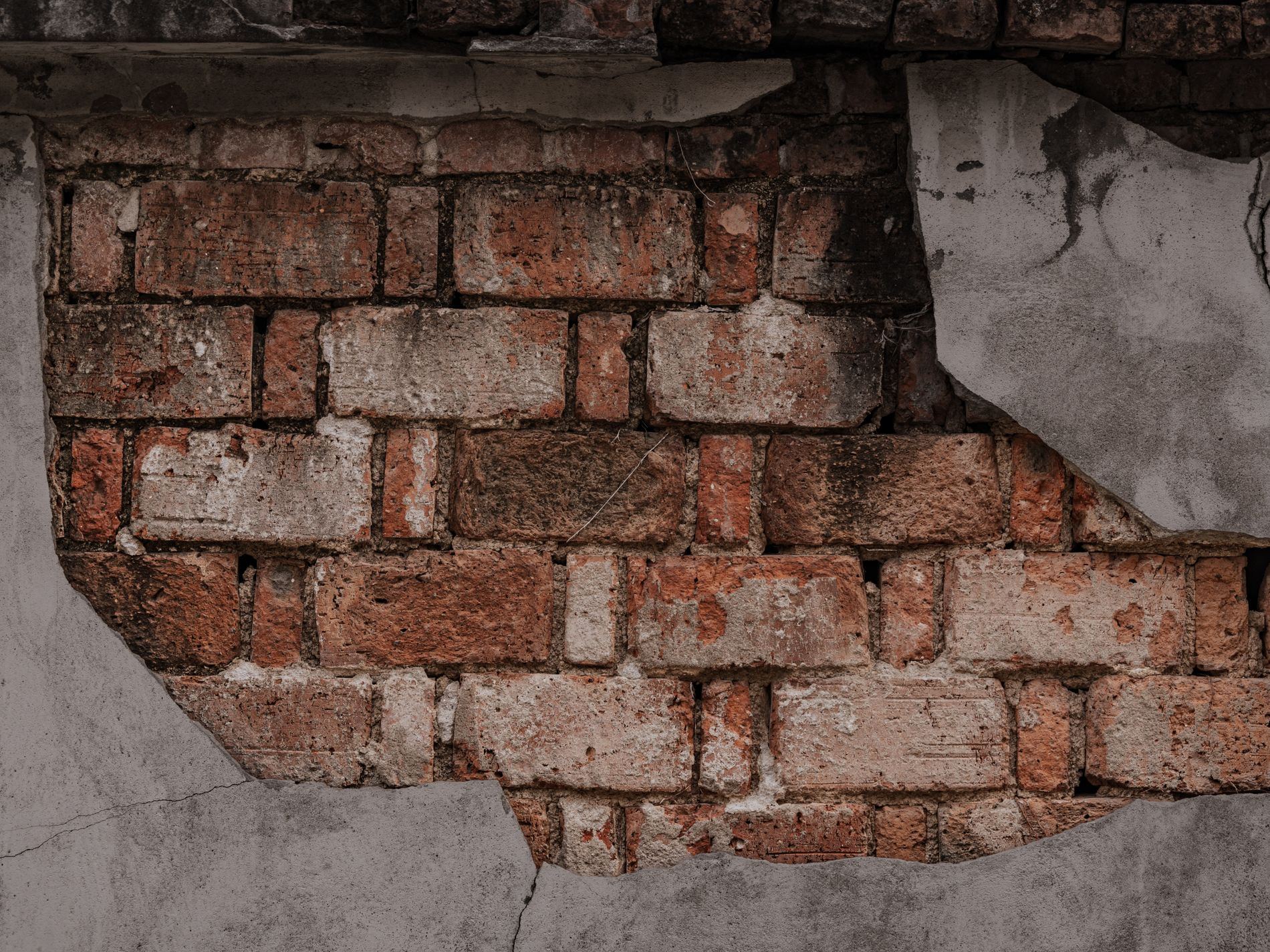
What stepped cracking means for a Southampton home
Why a crack follows the mortar joints
When you notice a crack in mortar joints outside wall surfaces, it usually runs in a zigzag or staircase pattern because the mortar is softer than the bricks around it. The wall takes the path of least resistance. People often search for the staircase cracks brickwork meaning when they first spot one, worried that the whole wall is failing. In many cases the masonry itself is sound and the joints have simply opened as the wall moved slightly.
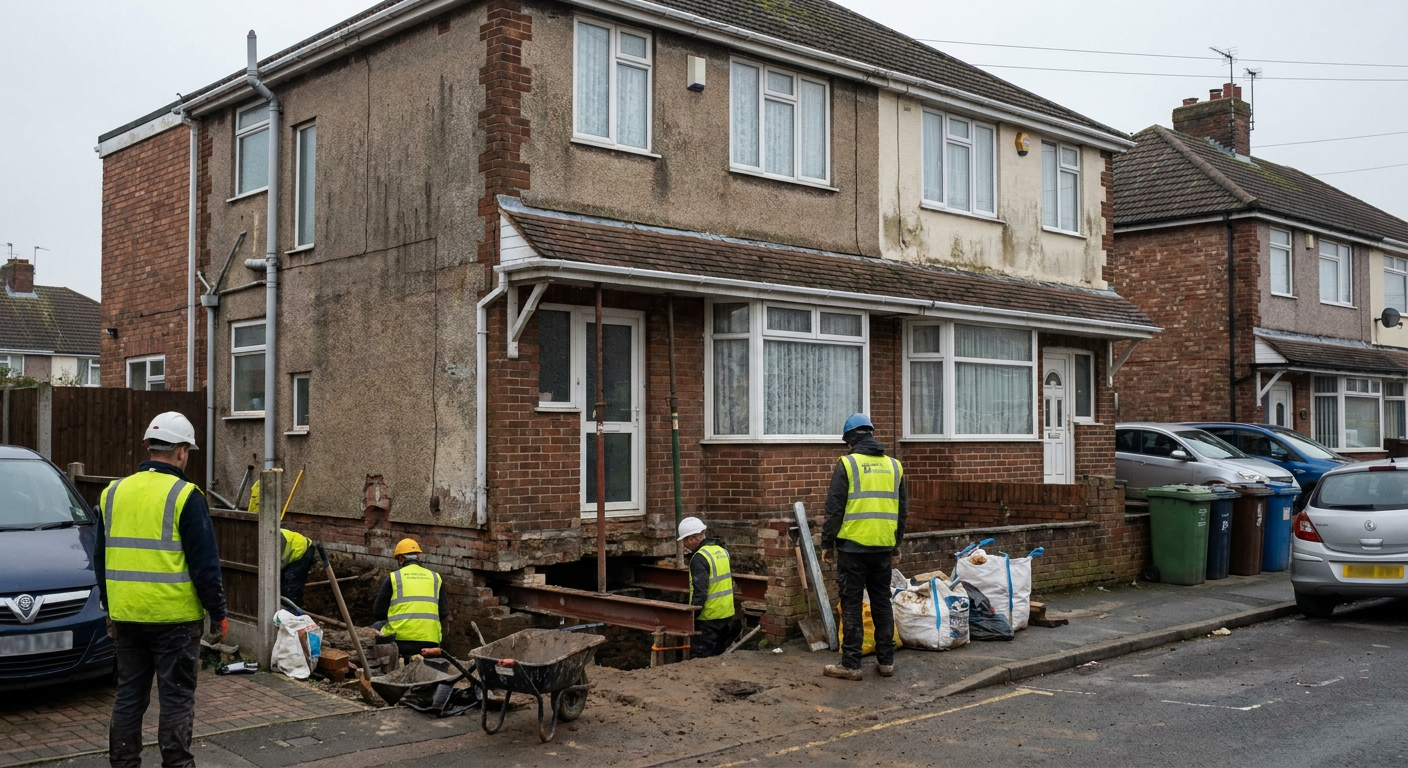
A brick wall crack in Southampton homes frequently appears after a long dry spell. The clay soil beneath much of the city shrinks when it loses moisture, and the foundations settle unevenly. That uneven settlement pulls the wall apart along its weakest lines. You might also see a diagonal crack above window frames or door openings, since these are points where the wall has less material to hold together. None of this automatically means the house is unsafe, but it does mean the movement needs to be understood before anyone fills it in.
How wide a crack has to be before it matters
Homeowners often ask how wide does a crack have to be before I should worry. Hairline cracks under one millimetre are common in older buildings and rarely point to a structural problem. Once a gap reaches two or three millimetres, a specialist will want to look closer. Anything wider than five millimetres usually signals movement that warrants investigation, especially if it appeared quickly or continues to open.
The question of when is a wall crack dangerous depends on more than width alone. A narrow crack that is actively growing is more concerning than a wider one that has sat unchanged for decades. Recording the measurement over time helps establish whether the movement is ongoing. You can read about recording cracks in walls to understand how specialists track changes. If the gap keeps widening, or if doors and windows start sticking nearby, the cause needs identifying before cosmetic repairs make sense.
Settling over years or subsidence happening now
People often wonder whether they are looking at subsidence or settlement cracks. Settlement happens once, usually soon after a building goes up, as the weight compresses the ground below. Subsidence is ongoing: something continues to remove support from the foundations. Tree roots extracting moisture from clay soil is a frequent cause across Southampton. Leaking drains washing away fine particles is another.
Telling the difference between old settlement and active subsidence requires a proper look at the site. A subsidence survey examines the soil type, drainage, nearby trees and the pattern of damage. Read more about the difference between subsidence or settlement in Southampton to understand what each process involves. Without that context, filling a crack is just hiding the symptom. If the ground is still moving, the filler will split again within months.
What the shape of the crack reveals
Does it matter whether the crack is wider at the top or the bottom? Yes, because the taper tells a specialist which part of the wall is dropping. A crack that opens towards the roof usually means the foundation below that end has sunk. One that widens near the floor suggests heave, where the ground is pushing upwards, often after a large tree is removed.
This shape is one reason a photograph on a phone cannot replace a visit. The specialist needs to see the full run of the crack, inside and out, and measure it at several points. They will check whether the wall is leaning, whether floors slope and whether the pattern matches known ground conditions in your part of Southampton. Areas like Totton and Sholing sit on different soils, so the same visible damage can have entirely different causes.
Filling the crack without finding the cause
Can I just fill it and repaint or will it come back? If the movement has stopped completely, a repair will hold. But applying filler to an active crack wastes money and delays the real fix. The pressure that opened the gap will open it again, pushing through whatever sealant sits on top.
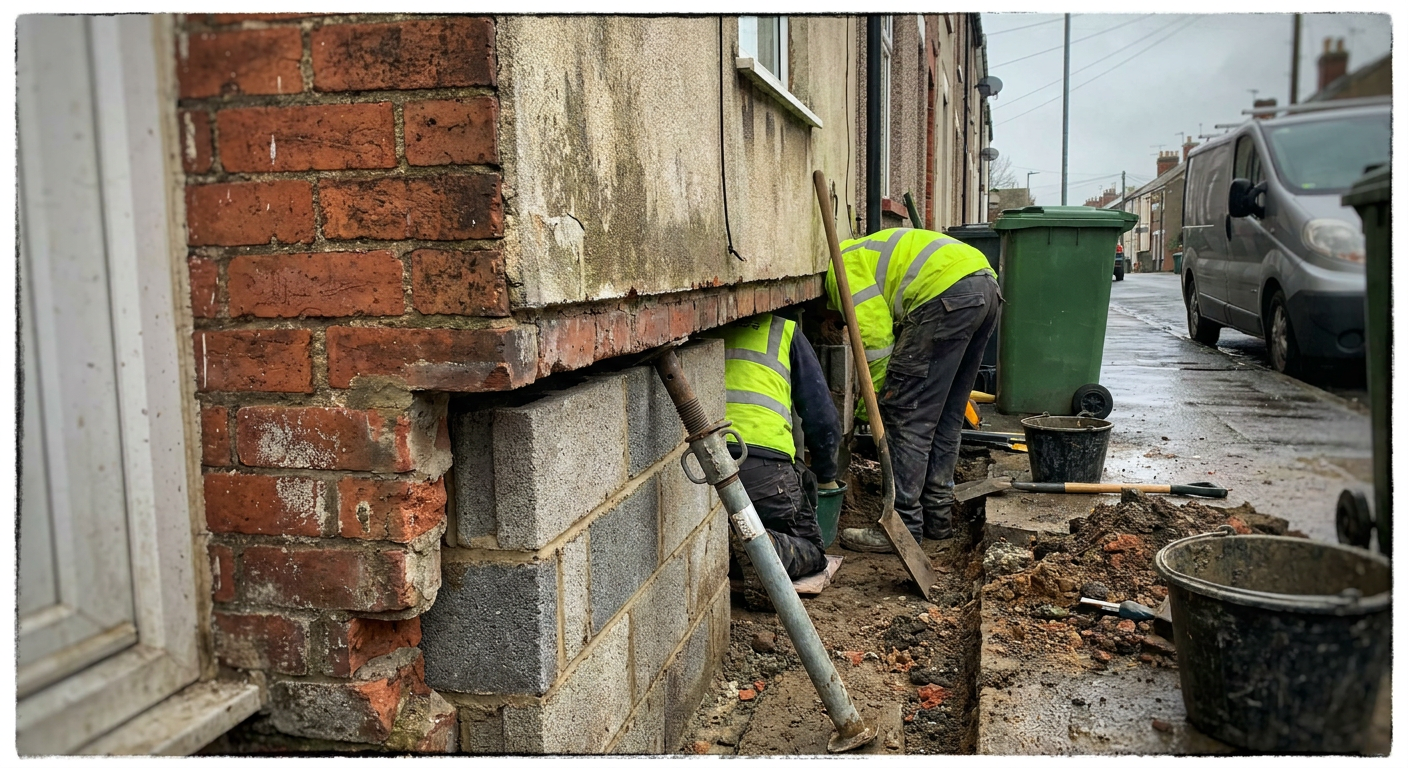
Specialist crack repair addresses the cause first. That might mean managing nearby trees, fixing a leaking drain or stabilising the ground with resin injection. Only once the movement has stopped does repairing the masonry make sense. Structural monitoring uses small gauges fixed across the crack to prove whether it is still moving. A few months of readings give a clear answer, removing the guesswork.
Insurers, surveys and whether underpinning is needed
Should I report this to my insurer before getting anyone out? Most insurers want to know about suspected subsidence early, but check your policy wording first. Some require you to use their appointed surveyor, while others let you arrange your own assessment. Understanding whether house insurance covers subsidence helps you decide when to make that call.
Do stepped cracks always mean underpinning is needed? No. Many cases resolve with drainage repairs, tree management or resin injection to strengthen the soil. When the foundations themselves must be supported, methods range from mass concrete underpinning to mini piled underpinning, depending on depth and access. Basement underpinning follows different principles again, since the load paths change when excavating below an existing floor. A survey determines which approach fits your home, if any work is required at all.
Reading the signs in your brickwork
The same visible crack can point to harmless age-related settling or active ground failure. What matters is the combination of width, direction and location.
- Zigzag line running through the mortar
- Mortar is weaker than brick, so movement shows here first. A survey determines whether the cause is active subsidence or past settlement.
- Diagonal crack opening above a window
- Openings concentrate stress. This often indicates differential movement below, which monitoring over several weeks would confirm or rule out.
- Gap wider at the top than the bottom
- Suggests the foundation nearest the narrow end has dropped. Soil testing and level measurements help a specialist verify the direction of movement.
- Hairline crack that never changes size
- Likely historic thermal movement or initial settlement. Measuring it periodically with a gauge proves whether it remains stable.
- Crack that reopens after being filled
- Stepped cracks through mortar joints usually point to foundation movement, often caused by clay shrinkage or drainage issues. A structural survey and monitoring period settle whether the ground beneath a home is still shifting.
From noticing a crack to getting answers
You do not need to diagnose the problem yourself. Describing what you see and where it is allows a specialist to decide the right next step.
-
Step 1
Describe what you have noticed
Note the location, approximate width and direction of the crack. Mention any sticking doors or recent dry weather. Send those details through the enquiry form.
-
Step 2
A specialist reviews the details
Someone experienced in Southampton ground conditions reads your description and decides whether a site visit is warranted or if monitoring should come first.
-
Step 3
A survey visits your home
If needed, a structural surveyor inspects the walls inside and out, checks levels and assesses the soil. You receive a written report explaining the findings.
-
Step 4
Work begins only if required
Many cracks need no structural intervention. If ground stabilisation or underpinning is necessary, a separate contractor carries out the agreed method.
Find out what the crack means for your home
Send a brief description of what you have noticed. It goes to someone who understands Southampton ground conditions, and it does not commit you to any work or cost.
- No obligation
- Local knowledge
- Clear next steps