Services
Subsidence repair services in Southampton
A crack or a sticking door means the ground beneath your home has moved. Find out what each underpinning method does, when a specialist firm uses it, and which approach suits the soil your house sits on.
Finding out what is happening to your home
Before any work starts, a specialist needs to understand why your home is moving. A subsidence survey records where cracks have opened, measures how wide they are, and checks whether the movement is still happening. The surveyor looks at the soil type, nearby trees, and drainage to work out the cause.
Southampton sits on a mix of clay, gravel, and chalk. Each reacts differently when the weather changes. Clay shrinks in dry summers and swells when it rains, so houses built on it move more than those on gravel. Knowing what is under your floor dictates everything that follows.
If you want to track the problem yourself first, recording cracks in walls gives you something concrete to show a surveyor. You can also read about the difference between subsidence and settlement to understand whether the movement is old or ongoing. Once the cause is clear, the right repair method becomes obvious.
Strengthening foundations with mass concrete
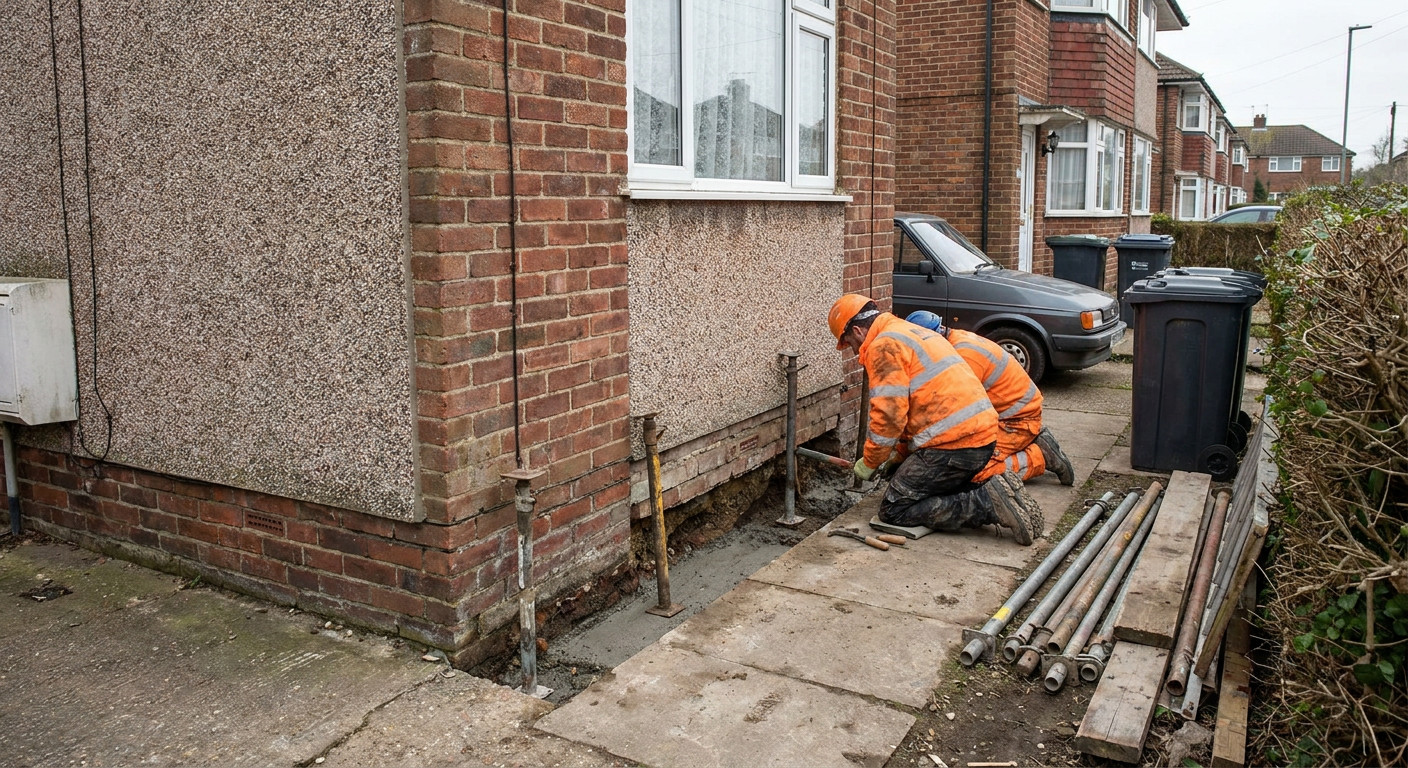
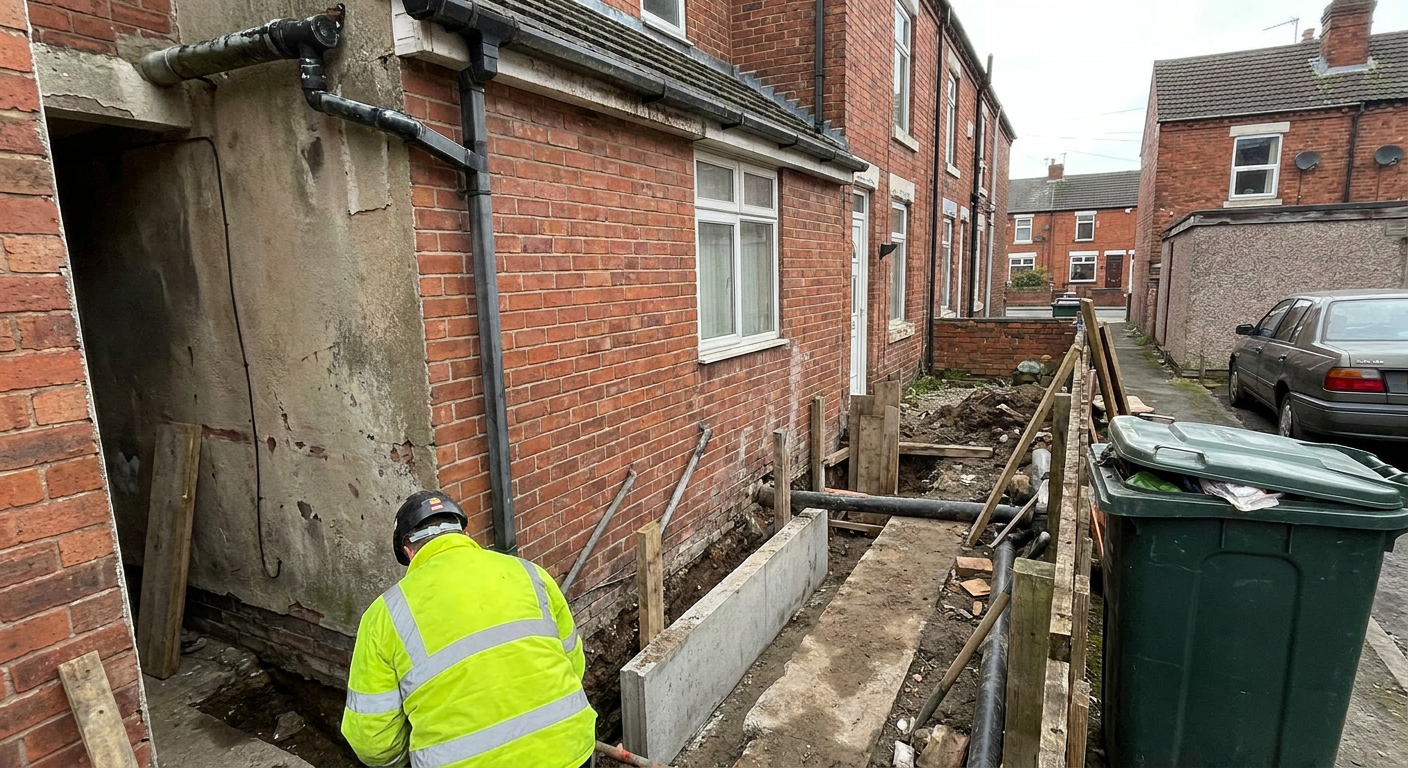
Mass concrete underpinning is the oldest way to stabilise a sinking wall. A specialist firm digs out sections of soil beneath the existing foundation in a set sequence, then fills each void with concrete. The new concrete base sits deeper than the old one, reaching soil that does not shrink or swell with the seasons.
This method works well for older houses in Southampton with shallow brick footings. It requires access to dig trenches along the affected wall, so it suits homes where the problem is limited to one side or one corner. The specialist excavates carefully to avoid disturbing the rest of the structure while the new concrete cures.
Because the work involves heavy digging next to your home, understanding what affects underpinning cost helps before asking for a price. The depth required, the length of wall affected, and how easily the site can be reached all change the final figure. Mass concrete remains the standard choice when deep piles are unnecessary.
Reaching stable ground with mini piles
When the weak soil goes too deep for mass concrete, a specialist firm uses mini piled underpinning. Steel-cased piles are driven or drilled down until they hit a load-bearing layer, sometimes several metres below the surface. A reinforced concrete beam then ties the piles together and supports the wall above.
This approach suits parts of Southampton built over old river channels or filled ground, where firm soil is far down. Mini piles transfer the weight of your home past the unstable layers entirely, rather than just widening the footing. They are also useful where access is tight, since the rigs used are small enough to fit through a standard doorway or down a narrow side passage.
Pile and beam underpinning carries the load through friction along the pile shaft as well as bearing on the tip. The specialist calculates how many piles are needed based on the weight of the building and the resistance the ground offers. It is a precise job, but it solves problems that shallow methods cannot reach.
Stabilising soil without digging with resin injection
Resin injection underpinning works differently from concrete or piles. A specialist firm drills small holes through the floor slab or alongside the foundation and pumps expanding structural resin into the ground. The resin fills voids, compacts loose soil, and can lift a sunken floor back towards its original level.
This method causes far less disruption than digging trenches. There are no skips full of spoil, no weeks of open excavations, and often no need to move out while the work happens. It suits homes where the movement is moderate and the soil can be improved rather than bypassed.
Resin injection is particularly useful for conservatories, extensions, and garage floors that have settled independently of the main house. The specialist monitors the lift with laser levels during the injection to control exactly how much the ground rises. If you are wondering whether you can stay in your house during the work, living at home during underpinning is usually straightforward with this method.
Repairing visible damage after the ground is stable
Underpinning stops the movement, but it does not close the cracks that movement caused. Crack repair comes after the foundation is secure. A specialist firm stitches masonry cracks with helical bars set into resin, restoring the strength of the wall so it acts as a single unit again.
For larger gaps, brickwork may need partial rebuilding. Internal plaster and external render follow once the structural repairs cure. Making good after underpinning covers the sequence of plastering, rendering, and decorating that returns your rooms to how they looked before the problem started.
Stepped cracks in brickwork often look alarming, but they follow the mortar lines because that is the weakest path. Recording their width over a few months shows whether they are still growing. If doors and windows start sticking, the frames have distorted because the wall around them has shifted. Fixing the foundation resolves the sticking, though the joinery itself might need easing or replacing once the house settles into its new position.
Working below ground level in basements
Basement underpinning strengthens or lowers the floor of an existing cellar so it can be used as living space. A specialist firm removes soil in controlled stages, pours new concrete walls or benches, and ensures the surrounding structure does not settle while the excavation is open.
In Southampton, many older terraces and semi-detached houses have shallow cellars that were never meant for habitation. Lowering the floor increases headroom, but it also changes how the walls carry load. The specialist designs temporary supports to hold the house up while the new, deeper foundations are formed.
Party wall agreements matter here if your home shares a wall with a neighbour. Underpinning a semi or terrace requires legal notice before work begins, because the excavation affects the shared structure. A party wall surveyor handles the paperwork so the specialist firm can proceed without disputes. Getting this sorted early prevents delays once the project is underway.
Watching the building over time
Sometimes the answer is not immediate repair but careful observation. Structural monitoring tracks how a building moves across weeks or months. A specialist firm fits gauges to cracks, sets up levelling points, or installs tilt sensors to record tiny shifts that the eye cannot see.
Monitoring tells you whether a problem is active or historic. If a crack has not widened in six months, expensive underpinning might be unnecessary. If movement continues through winter and summer cycles, the data shows exactly where and how fast the ground is failing, so the eventual repair targets the right spot.
Tree roots are a common cause of seasonal movement in Southampton. Large trees near a house draw moisture from clay soil in summer, causing it to shrink. Monitoring helps prove whether a specific tree is responsible before anyone suggests felling it. Understanding how tree roots cause subsidence avoids guessing and keeps the focus on evidence rather than assumptions.
Ask about your home's foundations
Send details of what you have noticed. A specialist firm reviews the information and advises whether a site visit is needed. This does not commit you to any work or cost.
- No obligation to proceed
- Specialist advice only
- Local to Southampton
Services
- Subsidence Survey
A subsidence survey in Southampton checks cracks, ground conditions and nearby drains and trees to find the cause and set out what repair work may follow.
- Mass Concrete
Mass concrete underpinning in Southampton deepens existing foundations in sections, suited to shallow footings on clay where there is room to dig.
- Mini Piled
Mini piled underpinning in Southampton suits tight access, deeper unstable ground and homes near trees, using small piles to reach firmer soil below.
- Resin injection
Resin injection in Southampton stabilises weak or washed-out ground beneath foundations. See how it works, where it suits a home and what a survey covers.
- Structural Monitoring
Structural monitoring in Southampton tracks crack width and movement over time, showing whether a building is still moving before underpinning is decided.
- Crack repair
Crack repair in Southampton covers stitching, repointing and filling brickwork cracks once movement has stopped. Learn what each method suits.
- Basement Underpinning
Basement underpinning in Southampton deepens foundations so a cellar gains head height. Read what the work involves and which homes it suits.
- House underpinning
Underpinning a house in Southampton starts with finding out why the foundations moved. See what the work involves, the stages and which homes it suits.
- Foundation repair
Foundation repair in Southampton covers cracked brickwork, dropped floors and failing footings. Read what causes the damage and the repair options.
- Contractors
Underpinning contractors in Southampton handle foundation repair and subsidence work. See what to check before choosing a firm and how enquiries work.