Guides
Subsidence advice for Southampton homeowners
Every guide on this site is listed here. Read about the signs of ground movement, how specialist firms carry out underpinning, what a survey involves, and how insurance claims work when foundations shift beneath your home.
Understanding ground movement and cracks
A crack in brickwork does not always mean the ground beneath your home is failing. Some movement is normal as a building settles into the soil over its first few years. But stepped cracks that follow mortar lines, or gaps that widen at one end, often point to something more serious.
Read about [stepped cracks in brickwork](/sinking-and-settling/stepped-cracks-brickwork) to learn which patterns suggest subsidence and which are just surface shrinkage. If you notice a new gap, find out how to [record cracks in walls](/sinking-and-settling/how-to-measure-a-crack) so a specialist firm has accurate measurements to work from.
Southampton sits on varied geology. Parts of the city have clay soil that shrinks during dry weather, pulling foundations down with it. The guide on [cracks after a dry summer](/sinking-and-settling/cracks-after-a-dry-summer) explains why this happens and what to watch for once the rain returns. It also helps to understand the difference between [subsidence and settlement](/sinking-and-settling/subsidence-or-settlement-southampton), since the two words describe different problems and need different responses.
Tree roots extract moisture from the ground and can cause localised sinking. The page on [tree roots and subsidence](/sinking-and-settling/tree-roots-and-subsidence) sets out the signs that a nearby tree might be affecting your foundations.
Methods used to stabilise foundations
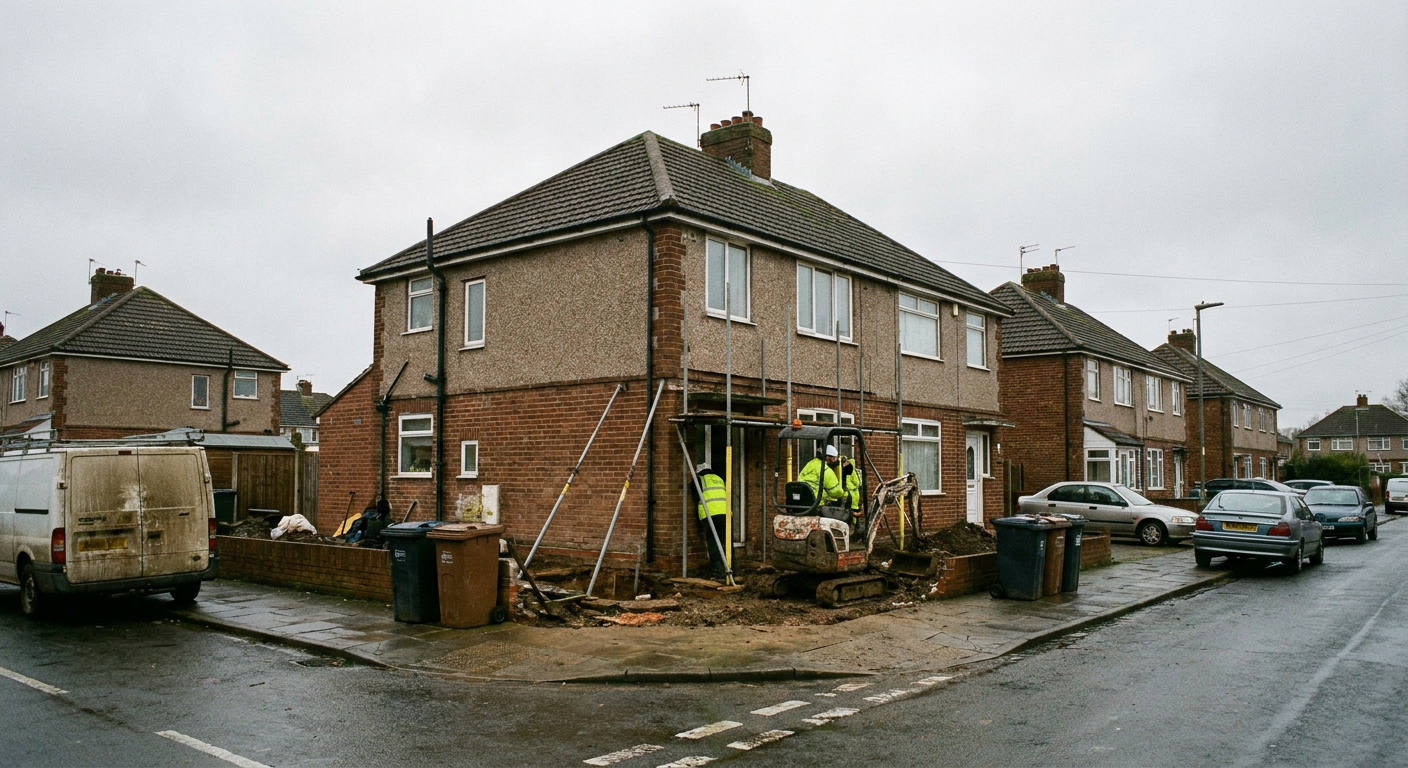
Once a problem is confirmed, a specialist firm will recommend a method suited to the soil, the depth of the existing footings, and the weight of the building. There is no single fix for every home.
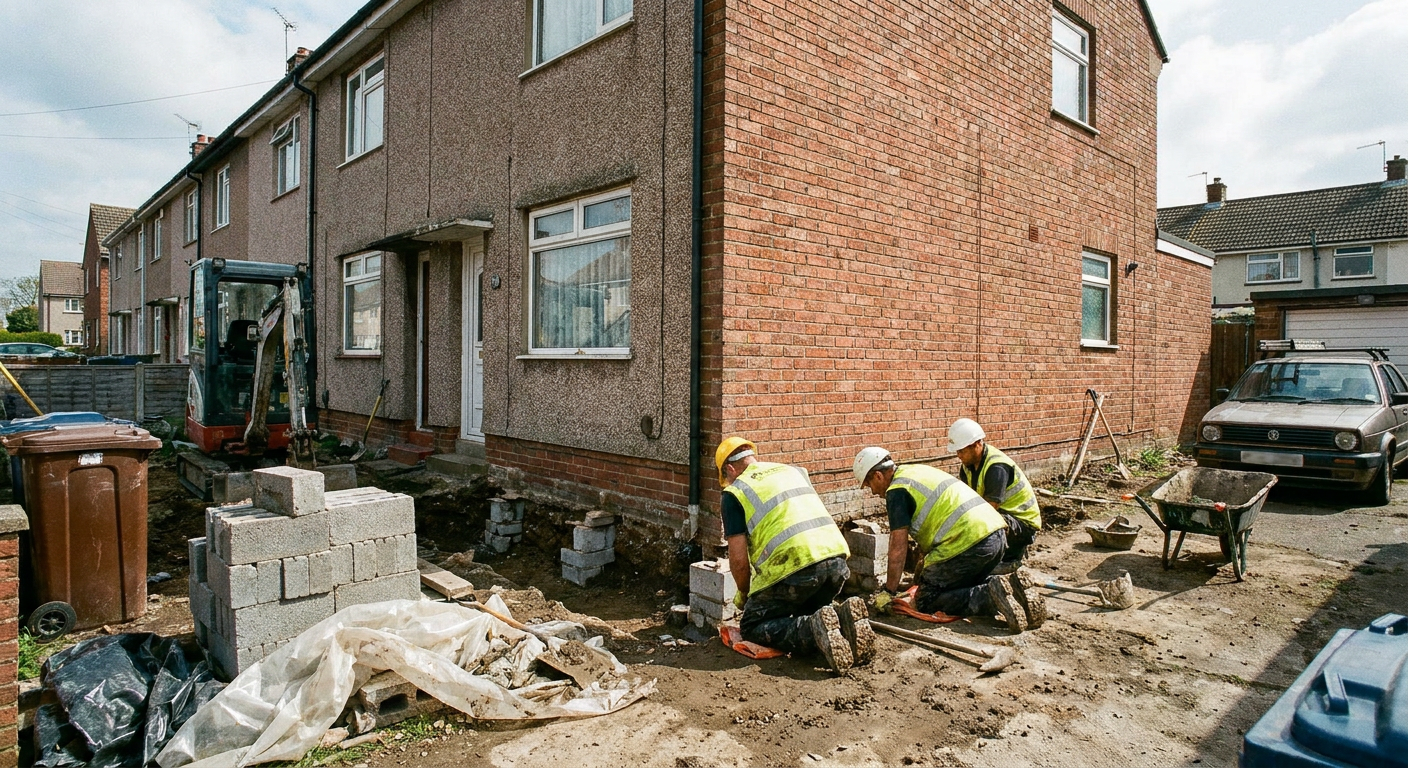
[Mass concrete underpinning](/mass-concrete-underpinning) is the traditional approach. The contractor excavates sections beneath the wall in sequence and pours concrete to form a new, deeper base. For heavier loads or weaker ground, [mini piled underpinning](/mini-piled-underpinning) drives steel-cased piles down to a load-bearing stratum far below the surface.
Where the ground needs strengthening without major excavation, [resin injection](/resin-injection-southampton) expands a structural resin into voids and loose soil, compacting it in place. A separate guide covers [pile and beam underpinning](/latest/pile-and-beam-underpinning-how-the-load-is-carried), explaining how the load transfers from the wall to the piles through a reinforced beam.
Not every situation requires underpinning. Sometimes [crack repair](/crack-repair) using helical bars and resin stitching is enough to restore strength to a wall that has stopped moving. If you are converting a cellar, [basement underpinning](/basement-underpinning) lowers the floor level while supporting the walls above. The broader guide to [underpinning a house](/house-underpinning) walks through what the whole job involves from start to finish.
Surveys, monitoring and choosing a firm
Before any work begins, a [subsidence survey](/subsidence-survey) establishes whether the ground is still moving and identifies the cause. A structural engineer or surveyor visits the home, records the damage, and checks drainage, trees, and soil conditions.
If the movement is slow or uncertain, [structural monitoring](/structural-monitoring) uses fixed points on the walls to track changes over weeks or months. This data tells the specialist firm whether the building has stabilised or if intervention is needed.
Finding the right contractor matters. The guide to [underpinning contractors](/underpinning-contractors) in Southampton sets out what qualifications to look for and how firms price their work. Costs vary widely depending on access, depth, and method, so the page on [what affects underpinning cost](/sinking-and-settling/what-affects-underpinning-cost) breaks down the main factors.
For a full picture of the options available locally, the [foundation repair](/foundation-repair-southampton) and [subsidence repair services](/services-southampton) pages list every method used across the city. You can also read about [how underpinning works](/how-we-work-southampton) from the first enquiry to the finished job.
Insurance, party walls and living at home
Subsidence claims involve your buildings insurer, and the process can take time. The guide on [whether house insurance covers subsidence](/sinking-and-settling/does-insurance-cover-subsidence) explains what policies typically include, what they exclude, and how a claim progresses once you report the damage.
If your home shares a wall with a neighbour, underpinning work triggers the Party Wall Act. The article on [party wall agreements for underpinning](/latest/party-wall-agreement-for-underpinning-a-semi-or-terrace) sets out the notices you must serve and the timeline involved.
Many homeowners worry about disruption. Read about [living at home during underpinning work](/latest/living-at-home-during-underpinning-work-what-to-expect) to find out what noise, dust, and access restrictions to expect day to day. A related guide answers whether you [can stay in the house](/latest/can-you-live-in-the-house-during-underpinning-work) for the full duration of the project.
Once the structural work is done, the inside of your home will need attention. The piece on [making good after underpinning](/latest/making-good-after-underpinning-plaster-render-decor) covers replastering, re-rendering, and redecorating so the rooms return to how they looked before.
Guides for areas around Southampton
Ground conditions change from street to street. Clay, gravel, and fill material all behave differently under a house, so the signs of subsidence and the methods used to fix it vary across the city.
Several area guides address these local differences. In Totton, the focus is on [cracks and ground movement](/our-patch/totton) near the river soils. Sholing has its own notes on [cracked walls](/our-patch/sholing), while Thornhill covers [underpinning](/our-patch/thornhill) on the higher ground to the east.
Hedge End residents can read about [subsidence help](/our-patch/hedge-end) specific to newer estates, and Hamble-le-Rice has a guide to [signs of movement](/our-patch/hamble-le-rice) in older properties near the water. Chilworth, Rownhams, and Nursling each have pages covering [underpinning](/our-patch/chilworth) and [subsidence](/our-patch/rownhams) in those villages, along with [Nursling](/our-patch/nursling).
Bassett has guidance on arranging a [subsidence survey](/our-patch/bassett), Redbridge covers [foundation repair](/our-patch/redbridge) near the estuary, and the West End page offers [subsidence help](/our-patch/west-end) for homes built on reclaimed land. Specialist firms also provide [resin injection in Hedge End](/resin-injection-hedge-end), [crack repair in Bassett](/crack-repair-bassett), and [subsidence surveys in Chilworth](/subsidence-survey-chilworth). A full list of [areas covered](/our-patch) shows everywhere these guides apply.
Ask about a problem with your home
Send a description of what you have noticed. The details go to a specialist firm who handles enquiries for Southampton. Writing in does not commit you to a survey or any building work.
- No obligation
- Local specialists
- Free to enquire
Guides
- Stepped cracks
Stepped cracks in brickwork follow the mortar joints and can point to foundation movement. Learn when stepped cracks are serious and what to check next.
- Measuring cracks
Recording cracks in walls shows whether movement is still going on. How to measure the width, mark each end, date your photos and keep a simple log.
- Dry summer cracks
Cracks after a dry summer often follow shrinking clay soil under the foundations. Learn what to look for, how to record a crack and when a survey helps.
- Subsidence or settling
Subsidence or settlement both show as cracks, but the causes differ. Compare the signs, when movement stops and what to check next on a Southampton home.
- Tree roots
Tree roots can cause subsidence when they draw water from clay soil near foundations. Find out which trees matter, how far roots reach and what to check.
- Subsidence insurance
House insurance often covers subsidence, though an excess usually applies. See what to tell your insurer, how a claim works and what cover excludes.
- Sticking Doors
Wondering why your doors are sticking? Damp, swollen timber and foundation movement all cause it, and the signs that point to subsidence differ.
- Underpinning cost
Underpinning cost depends on access, depth, soil and the method chosen. See what affects the price of foundation work and why quotes differ so widely.
- Help and Advice
Worried about cracks? This guide sets out the signs of subsidence, from stepped cracks and jamming doors to sloping floors, and what to check next.