Cost guide
How much does underpinning cost in Southampton?
The cost of underpinning a house depends on depth, access, the method chosen and how many bays need work. A specialist firm prices each job after visiting the home and reading the ground conditions.
Why nobody can quote over the phone
People often ask why can nobody give me a price over the phone for my Southampton house. The answer is that every home sits on different ground, and the soil beneath streets in Sholing behaves differently from the clay around Chilworth or Nursling. Without seeing the building and understanding what has moved, any figure would be a guess.
A specialist firm visits the home to record cracks, check levels and look at the surrounding trees and drains. That visit produces a [subsidence survey](/subsidence-survey) report. Only then can the contractor say which method fits, whether that is [mass concrete underpinning](/mass-concrete-underpinning), [mini piled underpinning](/mini-piled-underpinning) or [resin injection](/resin-injection-southampton). Getting an underpinning estimate starts with that inspection, because the ground dictates the work.
Southampton has a mix of Victorian terraces, post-war semis and newer builds on filled land. Each type settles differently. So the first step toward knowing how much does underpinning cost is letting a specialist stand in front of the wall and measure what has happened.
Depth, method and what drives the price
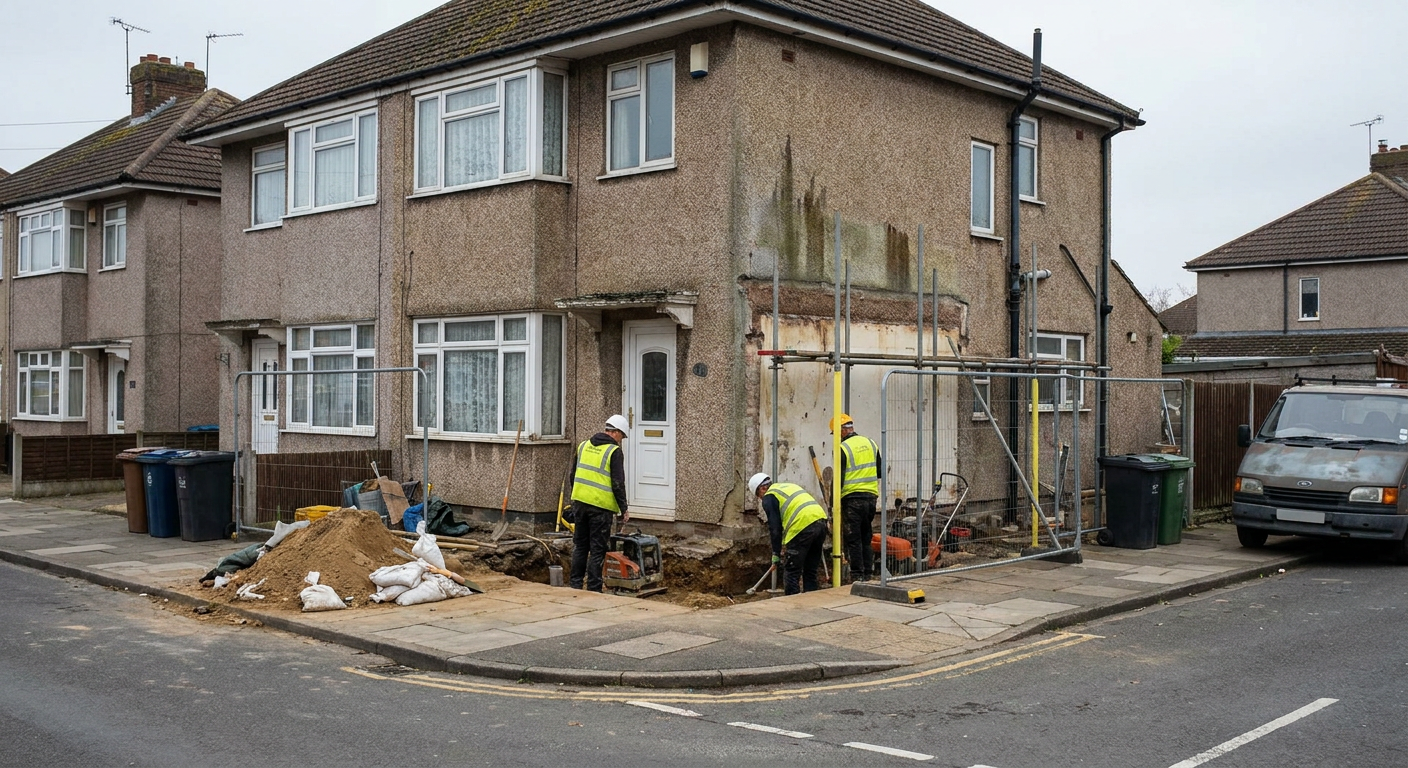
Does the depth they have to dig change the price much, and how is that decided? Depth is one of the main underpinning price factors. If stable soil lies two metres down, the excavation is straightforward. If it lies five metres down, or if the ground is waterlogged near the Itchen, the work changes entirely. Deeper foundations usually mean shifting from mass concrete to piles, which alters the subsidence repair cost in Southampton significantly.
The method matters too. Mass concrete fills a trench in stages. Mini piles transfer the load past weak soil to something solid, and you can read more about [how pile and beam underpinning carries the load](/latest/pile-and-beam-underpinning-how-the-load-is-carried). Resin injection compacts the ground without large excavations, which suits tight spaces. Each approach uses different plant, materials and time. What drives foundation repair costs is the combination of how deep the problem goes and which technique reaches it safely.
A [structural monitoring](/structural-monitoring) period sometimes precedes the decision, tracking whether movement is ongoing or historic. That data tells the specialist how much support the wall actually needs, preventing unnecessary excavation.
Access through the house or a narrow side alley
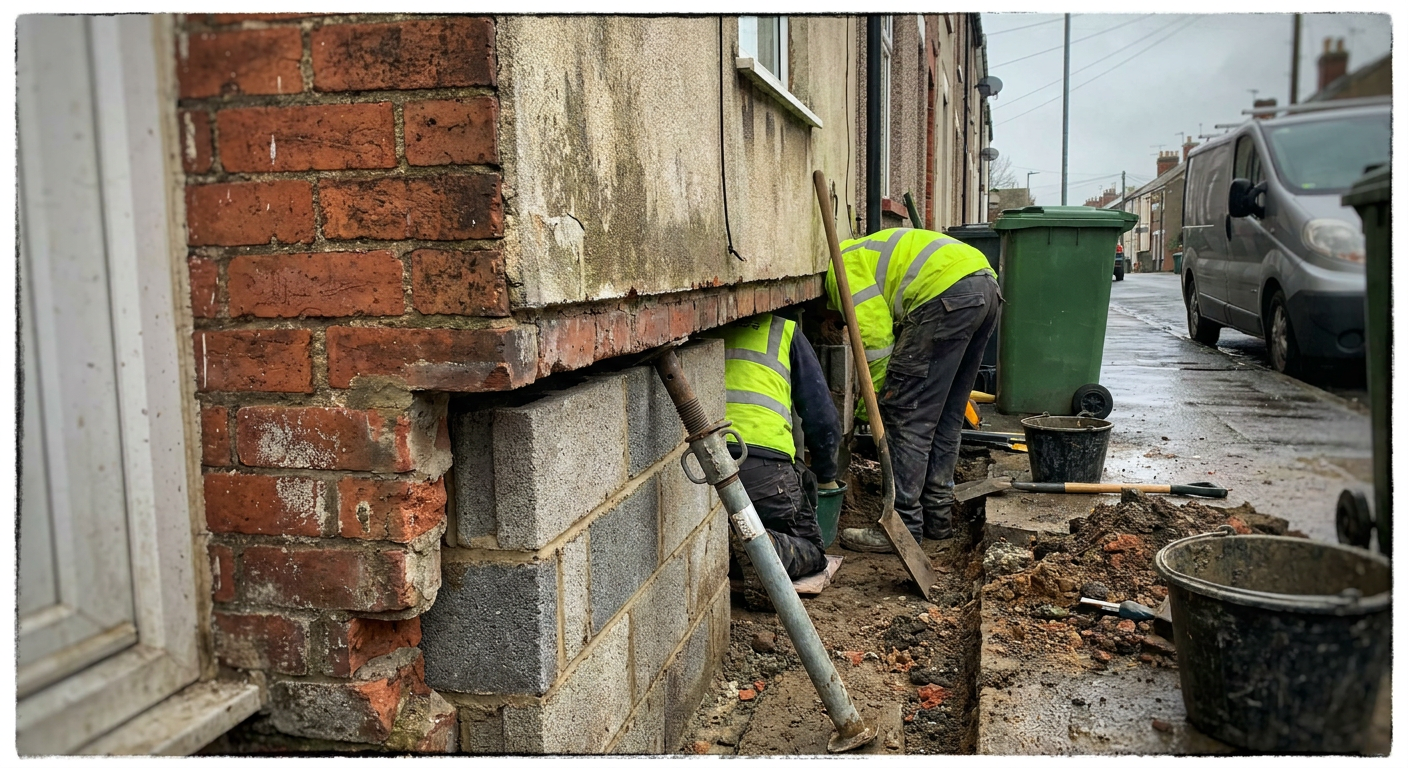
My only access is through the house or a narrow side alley, does that push the cost up? Yes. Restricted access means soil leaves the site in buckets rather than by dumper, and concrete arrives in smaller loads or by pump. Terraced houses in areas like Bassett or Redbridge often share narrow passages, so the contractor plans every delivery around the space available.
If machinery cannot reach the working face, more labour is needed to move materials by hand. That extra time adds to the cost of underpinning a house. In some cases, limited access makes resin injection a better fit, since the equipment is lighter and the process creates less spoil. The [underpinning contractors](/underpinning-contractors) handling the job will explain which method suits the site constraints before pricing anything.
Homes with rear extensions or conservatories built over old footings present another layer of difficulty. Working beneath an addition requires careful sequencing so the structure above stays supported throughout.
Bays and what paying for more actually covers
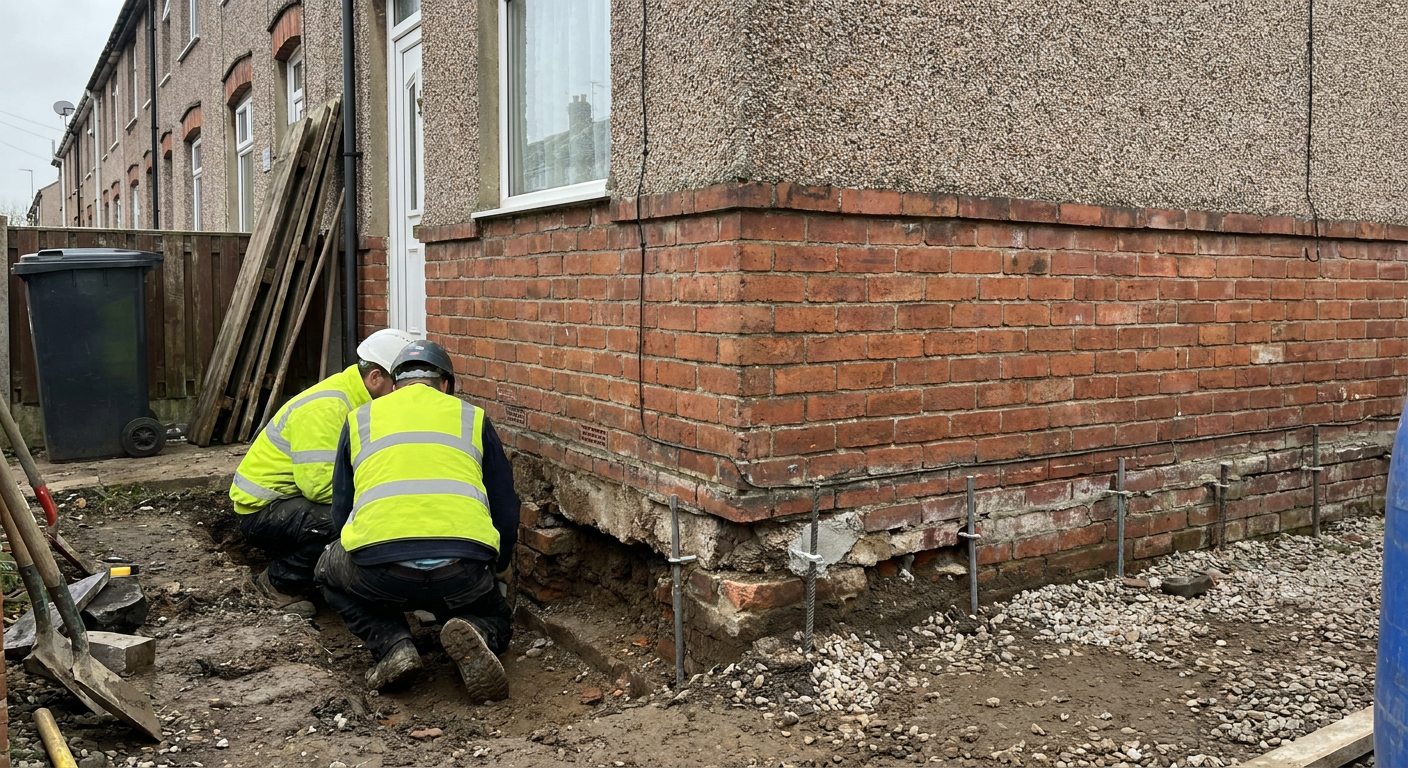
What is a bay, and does paying for more bays mean the whole wall is being done? A bay is a section of wall between two points of support, usually measured in metres. Underpinning is carried out one bay at a time, leaving adjacent sections untouched until the new concrete cures. This sequence keeps the wall standing while work happens below it.
The price per bay underpinning figure reflects the labour, concrete and excavation for that single section. Paying for three bays does not automatically mean the entire wall is underpinned; it means the three bays where movement is worst receive new foundations. A long wall might only need work at its corners or where a drain has washed soil away.
You can see how this applies when [underpinning a house in Southampton](/house-underpinning), where the specialist marks out exactly which bays require attention. Sometimes [crack repair](/crack-repair) alone handles the cosmetic damage once the bays are stabilised, but the structural work comes first.
Drains, making good and insurance claims
If the drains are the cause, is repairing them priced separately from the underpinning? Usually, yes. A leaking drain washes fine particles from the soil, creating a void. Fixing the pipe stops the leak, but filling the void and supporting the wall above it is a separate task. The drainage repair and the foundation work may involve different trades, even when one firm manages both.
Does making good the plaster, paths and flower beds come as part of the quotation or afterwards? Read about [making good after underpinning](/latest/making-good-after-underpinning-plaster-render-decor). Some quotations include internal replastering and external reinstatement; others cover only the structural work. Clarify this before agreeing to anything, so there are no surprises once the trenches close.
Will my insurer pay for any of this, and does that change how the work is priced? Insurance involvement is covered in detail on the page about [whether house insurance covers subsidence](/sinking-and-settling/does-insurance-cover-subsidence). When a claim is accepted, the insurer appoints a loss adjuster who agrees the scope and the price with the specialist. The homeowner still needs to understand what is included, particularly regarding decoration and landscaping.
What to have ready before the visit
What do I need to have ready so the specialist can give me an accurate figure? Start by noting when you first saw the cracks and whether they have widened. [Recording cracks in walls](/sinking-and-settling/how-to-measure-a-crack) with a date and a width measurement gives the visitor a timeline. Mention any recent dry summers, since [cracks after a dry summer](/sinking-and-settling/cracks-after-a-dry-summer) point toward clay shrinkage.
Gather any drainage reports, tree surveys or previous engineer letters. If doors or windows have started sticking, note which ones and when, as [sticking doors and jamming windows](/sinking-and-settling/doors-and-windows-sticking-southampton) help map where the frame has distorted. Understanding [the difference between subsidence and settlement](/sinking-and-settling/subsidence-or-settlement-southampton) also helps you describe what you see accurately.
If large trees stand close to the house, consider whether [tree roots could be causing subsidence](/sinking-and-settling/tree-roots-and-subsidence). The more context you provide, the faster the specialist can determine whether the problem needs [foundation repair](/foundation-repair-southampton), monitoring or immediate intervention. Preparation shortens the gap between the first visit and a clear quotation.
What the signs around your home suggest
Cracks and sticking doors appear in many homes, but the cause varies. The same symptom can point to shallow settlement or deeper subsidence, and only a site visit separates them.
- Diagonal crack wider at the top
- Often indicates differential movement in the foundations. A subsidence survey establishes whether the shift is active or historic.
- Doors catching on the frame
- Suggests the door lining has distorted because the wall moved. Monitoring over several months shows if movement continues.
- Gaps opening around window sills
- This reading usually points to a lintel dropping or masonry settling unevenly. A specialist inspects the wall ties and footing condition to determine the extent of movement and decide what repair is needed.
- Stepped cracking along mortar joints
- A pattern like this typically indicates brickwork responding to foundation movement below it. The specialist measures crack width over time to establish whether it is still widening before deciding on next steps.
- Floors sloping towards one wall
- Can mean the ground beneath that wall has compressed or washed away. Trial holes reveal the soil state.
What shapes the cost of underpinning
Every home in Southampton sits on different ground, so the work required to stabilise it varies. No two jobs follow the same plan or carry the same expense.
- Depth to stable ground
- Deeper excavation requires more material, larger plant and longer working time to reach competent soil.
- Access to the working face
- Narrow alleys or internal routes slow spoil removal and concrete placement, adding labour hours.
- Number of bays affected
- Each bay is priced individually. More bays mean more excavation, concrete and curing time.
- Chosen underpinning method
- Mass concrete, mini piling and resin injection use different equipment, materials and crew sizes.
- Drainage repairs needed
- Fixing a broken drain that caused the movement is a separate task from stabilising the wall above it.
- Reinstatement and making good
- Replacing paths, replastering walls and restoring landscaping adds to the total if included in the scope.
The specialist explains the full cost of the specific job before any agreement is signed.
Ask about your home's foundations
Send a description of what you have noticed. A specialist firm reviews the details and arranges a site visit if the signs warrant one. There is no obligation to proceed.
- No obligation
- Local specialists
- Site visit arranged