Guide
Can you live in the house during underpinning work?
Whether you can stay in your home while a specialist firm underpins it depends on which rooms are affected, the access required and how the job is staged. Find out what to expect from the noise, dust and daily disruption.
Why staying at home is sometimes possible
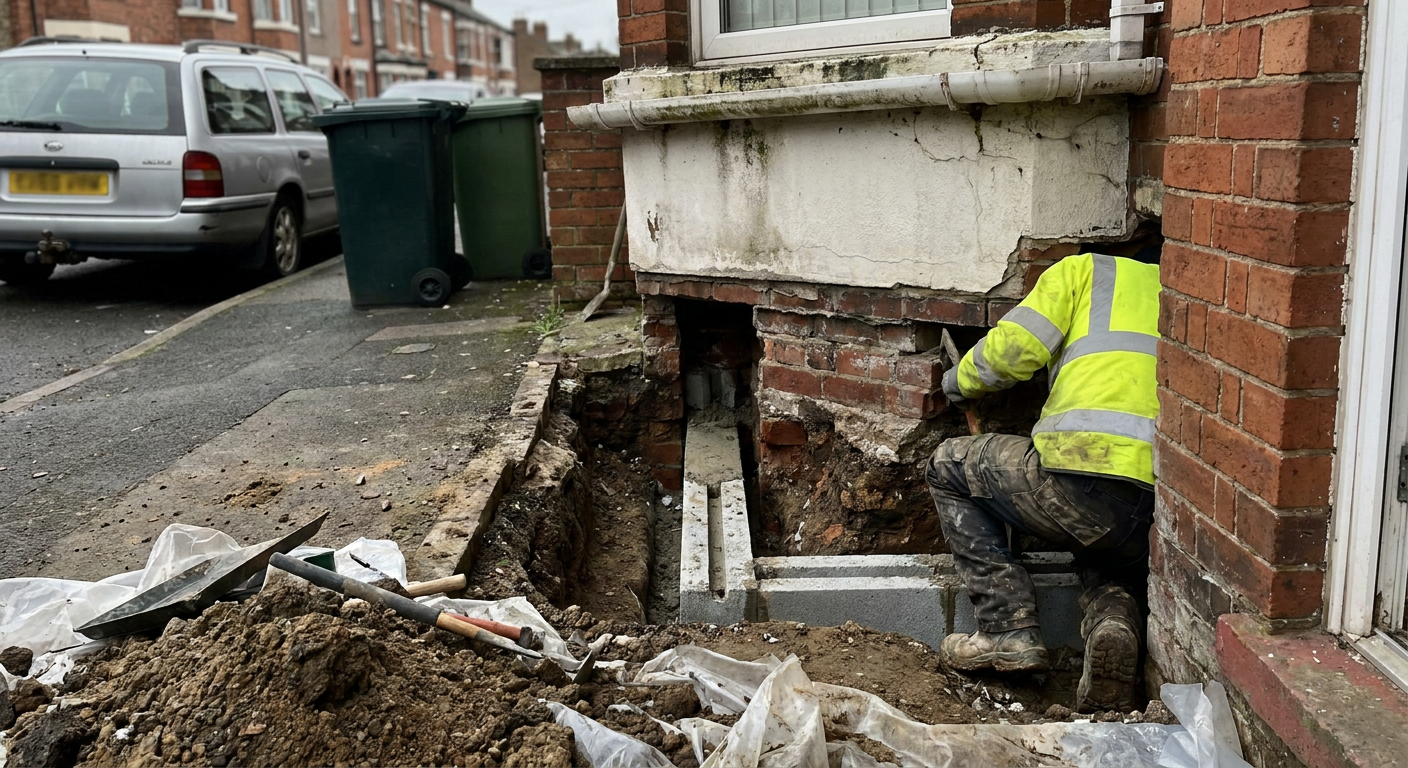
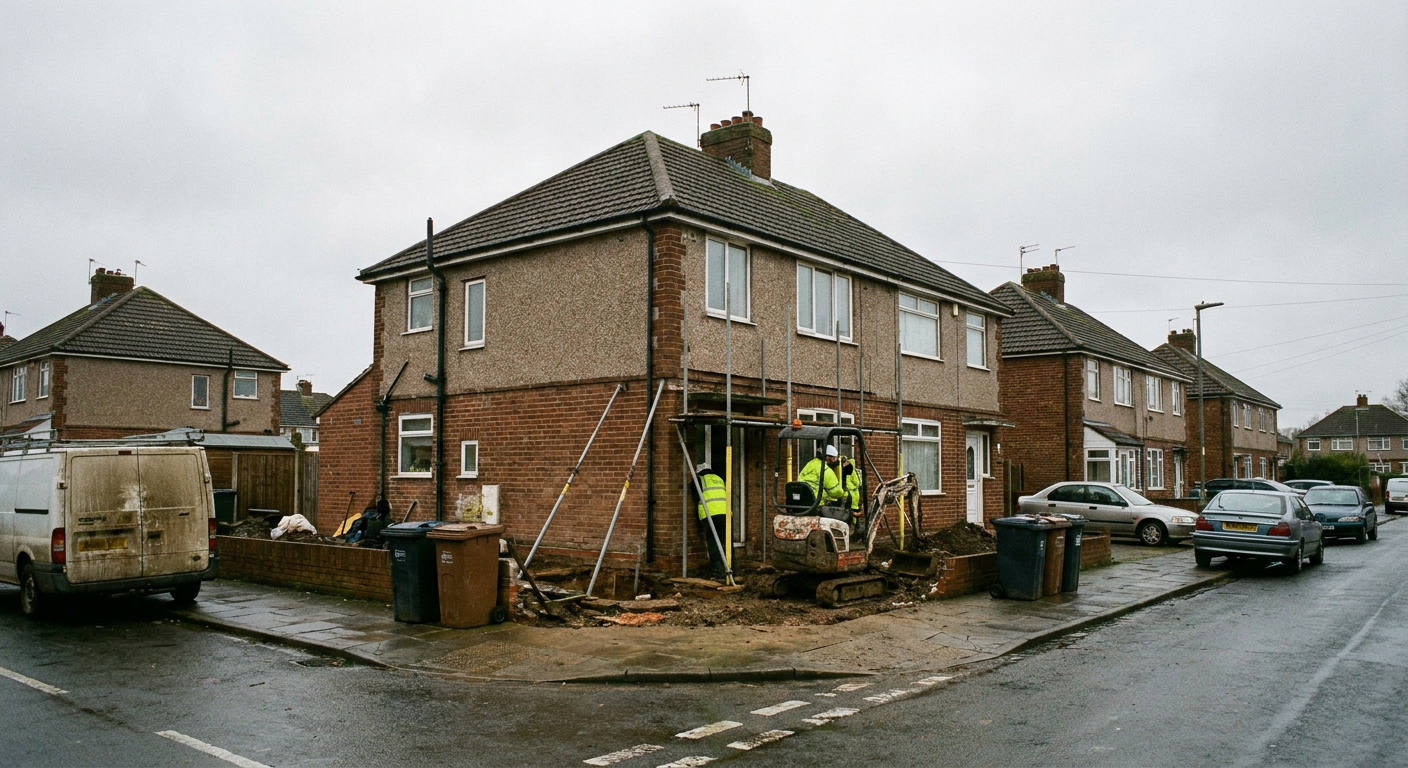
A lot of underpinning happens outside the walls. When a specialist firm digs beneath the exterior foundations of a house, the main disruption stays outdoors. Trenches are opened along the perimeter, concrete is poured or resin is injected, and the interior rooms remain largely untouched.
This means you can often keep using your kitchen, bathroom and living room as normal. The specialists will need clear access around the outside of the building, so garden furniture, sheds and planted borders near the wall may have to be moved. But inside, daily life carries on with only minor interruptions from noise and vibration.
The method matters too. [Resin injection](/resin-injection-southampton) involves drilling small holes and pumping material into the ground, which generates far less mess than excavating deep trenches. If the ground conditions allow this approach, staying put is usually straightforward. A larger excavation using [mass concrete underpinning](/mass-concrete-underpinning) takes longer and creates more disturbance, but even then the work remains external.
When moving out becomes necessary
Interior work changes the picture completely. If the subsidence affects load-bearing walls inside the house, or if the floor needs to be lifted and replaced, staying becomes impractical. You cannot cook, sleep or wash safely in a building where the floors are open and structural supports are being altered.
[Basement underpinning](/basement-underpinning) is another situation where leaving is usually the only option. Digging out or lowering a cellar floor means removing the ground beneath the lowest level of the house. Dust, noise and restricted access make the rooms above difficult to live in until the concrete cures and the space is sealed again.
Even when the work is external, severe cases might require temporary relocation. If the movement has left the structure unstable enough that a [subsidence survey](/subsidence-survey) recommends immediate intervention across multiple walls, the specialists may ask you to leave while they secure the building.
Dust, noise and daily disruption
Underpinning is construction work. Even when you can stay, expect noise from early morning. Excavators, concrete mixers and drills start when the crew arrives. The sound travels through the walls, especially in terraced houses or semis where the party wall might also need attention.
Dust is unavoidable when soil is dug out or masonry is cut. Specialists use sheeting and barriers to limit how much enters the house, but fine particles find their way indoors. Keeping internal doors shut and covering furniture helps. You will be cleaning surfaces more often than usual until the job finishes.
Vibration is another factor. Piling rigs used in [mini piled underpinning](/mini-piled-underpinning) shake the ground as they drive piles down to stable strata. Pictures rattle on walls, cups shift on tables, and sleeping through the noise requires patience. The specialists plan the noisiest stages carefully, but you should prepare for several days of significant disturbance before things quieten down.
How the specialists stage the work
A well-planned job moves around the building in sections rather than opening every trench at once. This keeps part of the foundation supported at all times and limits how much of your garden or driveway is torn up simultaneously.
Staging also dictates your routine. If the crew is working on the rear wall one week and the side wall the next, you know which doors to avoid and where the machinery will be parked. The specialists will explain the sequence before they start, so you can plan meals, work hours and school runs around the heaviest activity.
Sometimes a pause is built in. After pouring concrete, the mix needs time to cure before the next section is dug. During these gaps the site is quieter, though materials and equipment remain stacked nearby. Understanding this rhythm makes living alongside the project easier, because the worst disruption is concentrated into predictable windows rather than spread randomly across the whole job.
Preparing your home before work starts
Clear the area around the affected walls inside and out. Move bookshelves away from the masonry, take down mirrors and roll up rugs near the work zone. Outside, clear paths for wheelbarrows and machinery. If you park on the driveway, arrange alternative parking for the duration of the excavation.
Talk to the specialists about utility routes. Water pipes, gas lines and electrical cables often run close to foundations. They will locate these before digging, but knowing where your stopcock and fuse box are saves time if something needs isolating quickly.
If you have pets or young children, establish boundaries early. Open trenches and stacked materials are hazards. Fencing off the work area keeps everyone safe without requiring constant supervision. A bit of preparation prevents most of the friction between normal household life and a major structural repair.
Ask about your home
Send details of what you have noticed. The information goes to a specialist firm in Southampton who handles foundation repairs. There is no obligation to proceed.
- No commitment required
- Local specialists only
- Free initial discussion