Guide
Living at home during underpinning work: what to expect
Find out what staying in your home while a specialist firm carries out underpinning involves. Learn about noise, dust, which rooms you can still use and how long the disruption typically lasts.
Whether you need to move out at all
Many homeowners assume they must leave while underpinning takes place. That is not always true. Whether you can stay depends on the method the specialist firm uses and how much of the foundation needs work.
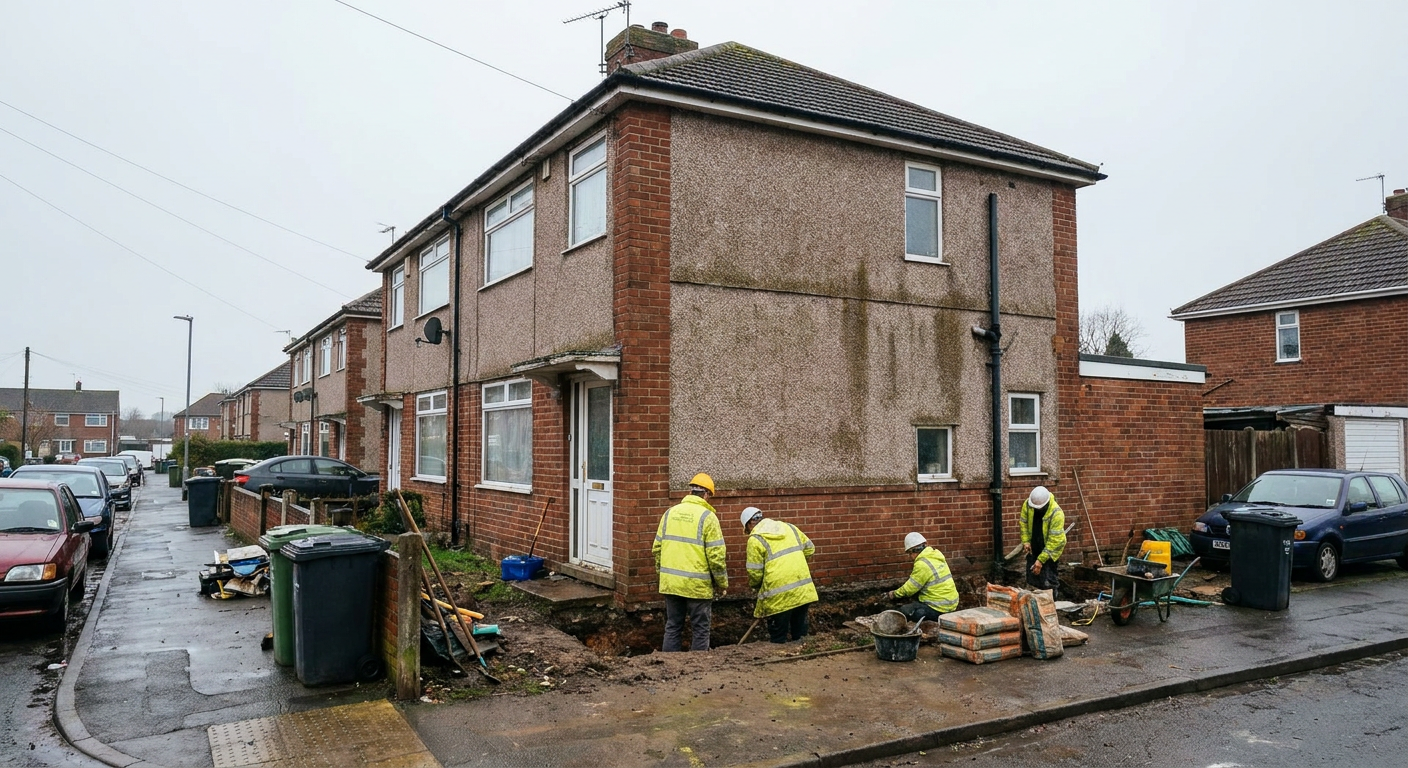
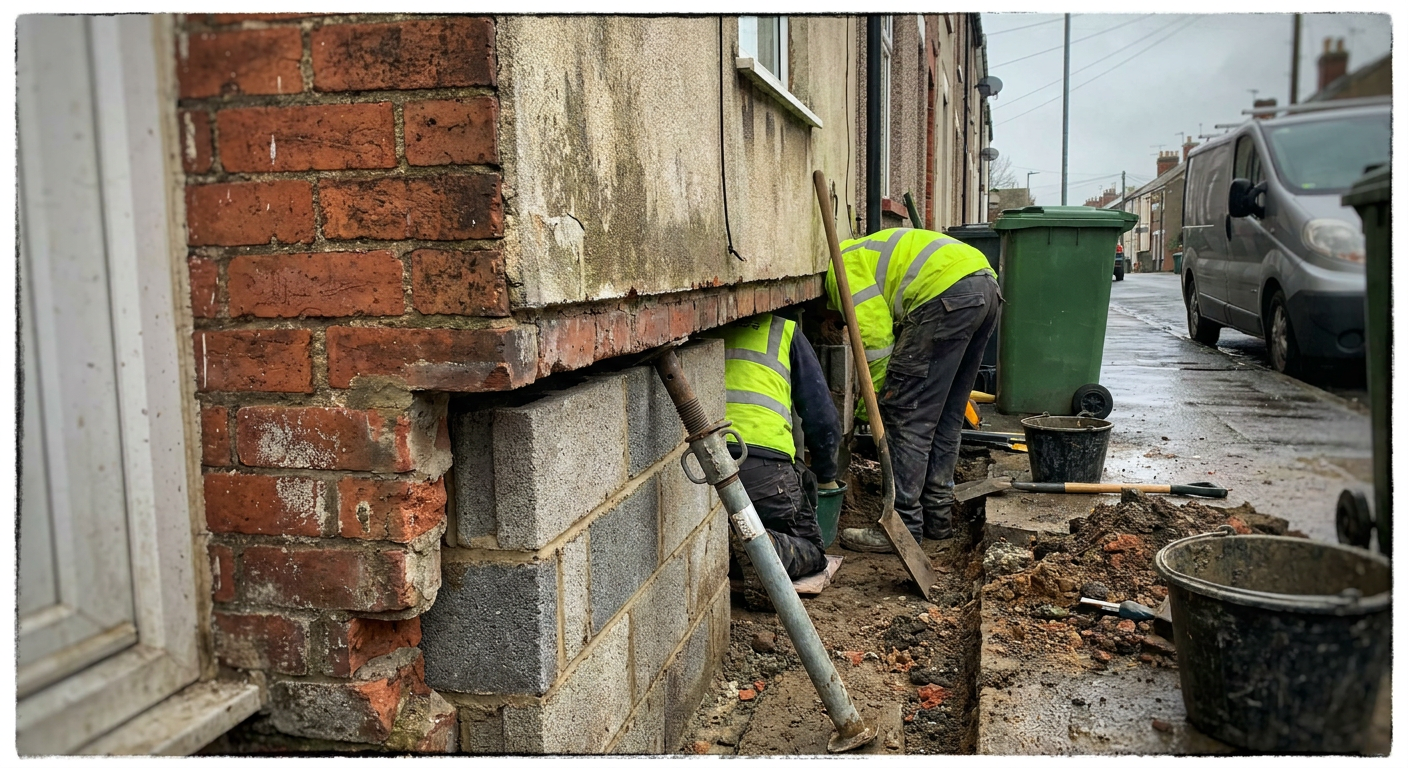
If the job involves [mass concrete underpinning](/mass-concrete-underpinning), sections of the ground are dug out one at a time. The work happens around the outside walls, so the inside of the house often remains usable. You might lose access to a garden or driveway, but the rooms above ground usually stay intact.
[Resin injection](/resin-injection-southampton) is quicker and less disruptive. The specialist pumps material into the soil through small holes, so there is no open trenching. People regularly stay in their homes throughout this process.
[Mini piled underpinning](/mini-piled-underpinning) drives piles deep into the ground. It creates more vibration and noise than resin, but it still does not automatically force you out. The deciding factor is whether the work compromises the structural safety of the floors you walk on. A [subsidence survey](/subsidence-survey) before work begins will establish what is safe.
Noise, vibration and working hours
Underpinning is construction work. Even the quietest methods produce sound you will hear inside the house. Expect drilling, digging and the movement of heavy materials.
Specialist firms generally work standard daytime hours, typically starting at eight and finishing by five. They do not usually work weekends unless the project has fallen behind or the ground conditions demand continuous pours. If you work from home, the noise will make phone calls difficult during those hours.
Vibration is a separate concern from sound. When a firm installs [mini piles](/mini-piled-underpinning), the driving action sends shocks through the ground. Plates rattle in cupboards. Doors may swing open on their own. The vibration is monitored, and if it exceeds safe limits for the building, the method changes. [Structural monitoring](/structural-monitoring) tracks movement in real time so the specialist knows exactly how the house is responding to the work.
Mass concrete underpinning produces less vibration than piling because the soil is removed by hand or small excavator rather than driven through. But the digging itself, and the mixing or delivery of concrete, still generates constant background noise.
Dust and keeping the house clean
Digging trenches and breaking ground releases fine soil particles. Concrete mixing adds cement dust. Even with precautions, some dust will find its way into the house through gaps in doors, windows and floorboards.
The specialist firm will use sheeting to seal off the immediate work area. They may build temporary screens between the trench and the nearest window. But you should expect to clean surfaces more often than usual while the work is ongoing.
If the underpinning requires access through the house, perhaps to reach a basement, the dust problem increases significantly. [Basement underpinning](/basement-underpinning) often means removing internal floor sections, which exposes the rooms above to debris. In those cases, moving out temporarily is far more comfortable.
For external work only, keeping windows on the affected side closed helps. Running an air purifier in the main living space reduces the amount of fine particulate you breathe. Once the [foundation repair](/foundation-repair-southampton) is complete and the trenches are backfilled, the dust settles quickly.
Which rooms you can still use
Rooms directly above the underpinned wall are the most affected. If the specialist is working along the rear wall, the kitchen or a ground-floor bedroom sitting on that wall may be off limits for safety reasons. Floors can flex slightly while the old foundation is removed and the new support cures.
Upper floors are generally safe to use, provided the specialist has confirmed the load path is secure. You might sleep upstairs while the ground floor room below you is cordoned off.
Bathrooms present a specific problem. Underpinning can require disconnecting drainage pipes that run beneath the foundation. If your soil pipe exits through the wall being underpinned, the toilet and shower connected to it may be out of service for days at a time. The specialist firm will arrange temporary facilities or reroute waste where possible, but you should ask about this before work starts.
Kitchens are similarly vulnerable if gas or water mains pass through the work zone. Plan meals that do not require cooking if the hob is disconnected.
Utilities, water and drainage disruptions
Underpinning frequently disturbs the services running into a house. Water pipes, gas lines, electricity cables and drains all enter the building at or below ground level. When the soil around the foundation is excavated, these services are exposed.
A responsible specialist firm locates every utility before digging begins. They support pipes and cables on temporary brackets so nothing sags or snaps when the earth is removed. But supporting a pipe is not the same as leaving it in service. Water may need to be shut off while a section is moved. Gas engineers must cap and reconnect supply lines, which requires a separate visit.
Drainage is the most common casualty. Clay drains crack easily when the ground shifts. If the underpinning addresses subsidence caused by leaking drains, the [crack repair](/crack-repair) and pipe replacement often happen together. Expect to use a chemical toilet or a neighbour's bathroom during those phases.
Electricity is rarely interrupted for long, since cables can usually be rerouted overhead. But power tools drawing heavy current may trip household breakers if the temporary supply shares your consumer unit.
How long the disruption lasts
The timeline depends entirely on the scale of the problem and the chosen method. Resin injection can stabilise a single corner of a house in a day or two. Mass concrete underpinning along an entire wall typically takes several weeks, because each section must be dug, poured and left to cure before the next one starts.
Piling sits somewhere in between. Driving mini piles is fast, but setting up the rig and connecting the pile caps to the existing foundation adds time.
Weather delays everything. Heavy rain fills trenches. Frozen ground resists excavation. The specialist firm builds contingency into the schedule, but you should prepare for the work to take longer than the initial estimate.
Once the structural work finishes, making good begins. Plastering, repointing brickwork and reinstating paths or driveways add another week or two. You can live through the making good far more easily than the digging phase. The noise drops, the dust clears and the rooms gradually return to normal use. Understanding the full sequence helps you decide whether staying put is practical or whether a few weeks away makes more sense.
Ask about underpinning your home
Send details of the problem you have noticed. A specialist firm reviews the information and contacts you to discuss what a survey would involve. There is no obligation to proceed.
- No commitment required
- Local specialists only
- Free initial discussion