Guide
Party wall agreement for underpinning a semi or terrace
Underpinning a shared wall means serving notice on your neighbour first. Find out when the Party Wall Act applies to foundation work, what the notice must say, and how disputes are settled before digging starts.
When the Party Wall Act applies to underpinning
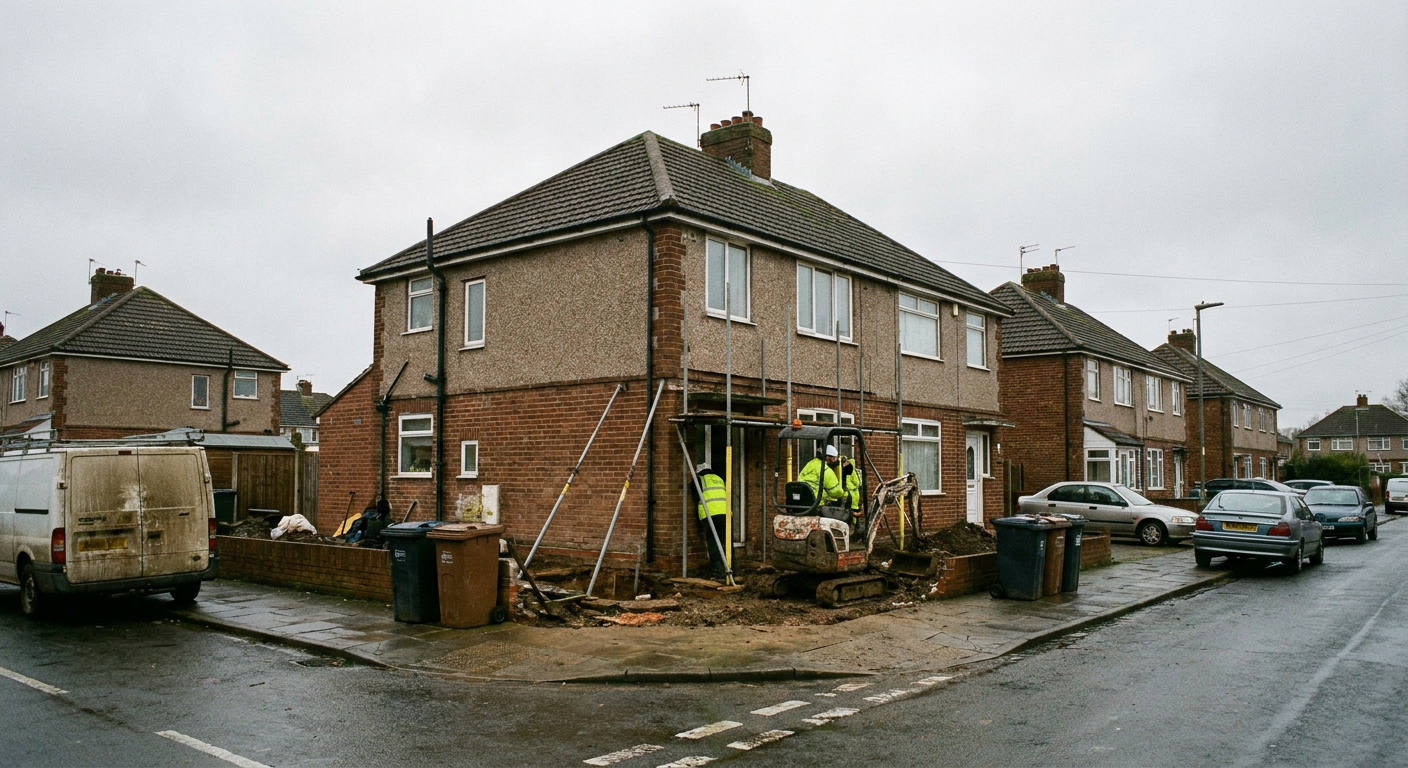
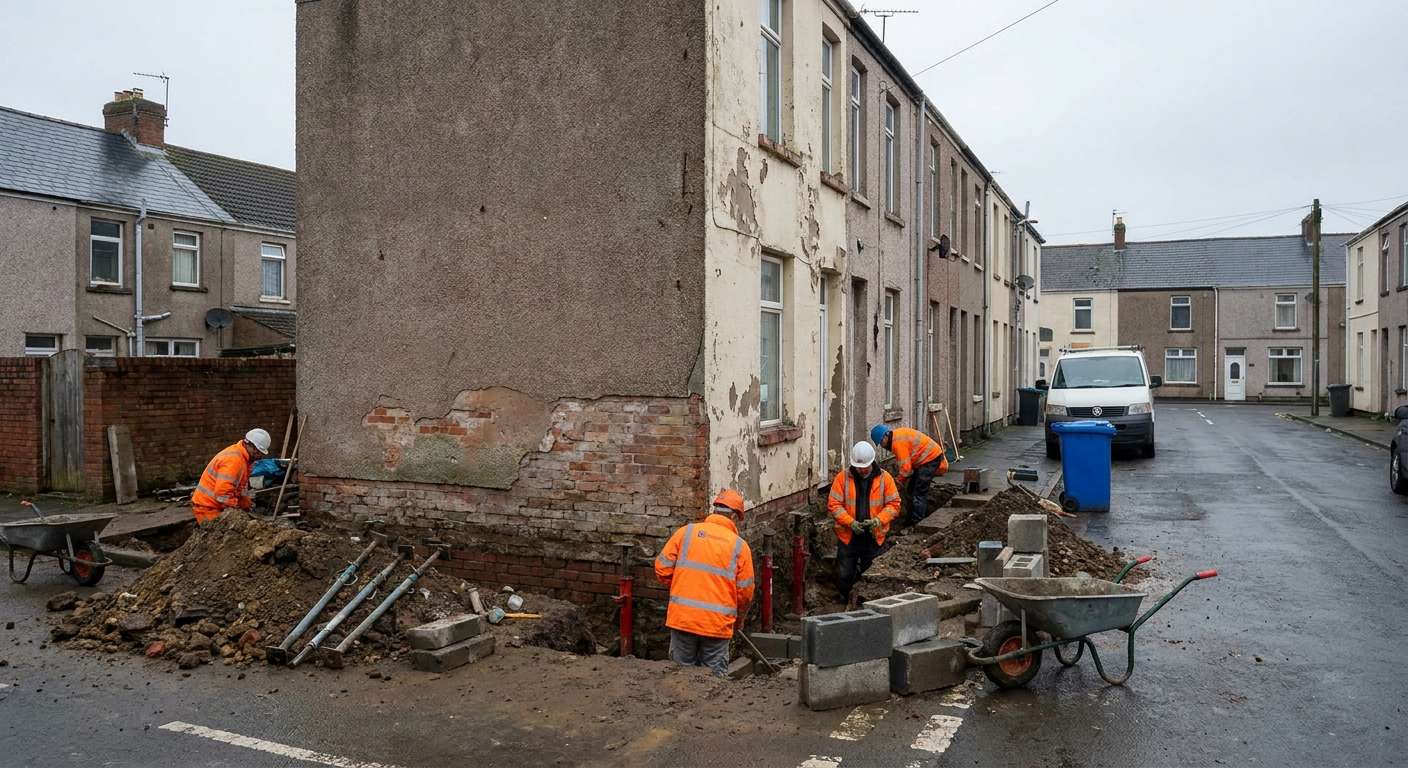
If your home shares a wall with the house next door, any work that touches the foundations of that wall falls under the Party Wall etc. Act 1996. Underpinning is specifically named in the legislation because it involves excavating below the existing footing depth.
This applies to terraced houses and semis across Southampton, where properties lean on each other structurally. Even if the subsidence only affects your side, stabilising the ground beneath a shared wall means working on something you both own.
A [subsidence survey](/subsidence-survey) will establish whether the movement is confined to your section or runs along the party wall. The surveyor records crack widths and monitors the building over time. If the report recommends [underpinning the house](/house-underpinning), the legal process begins before any contractor breaks ground.
Serving notice on your neighbour
You must serve written notice at least two months before excavation starts. The document needs to describe the proposed work, give the address, and state when you intend to begin. It goes to every owner of the adjoining property, not just the person living there.
The type of underpinning matters here. [Mass concrete underpinning](/mass-concrete-underpinning) involves digging bays sequentially beneath the existing foundation. [Mini piled underpinning](/mini-piled-underpinning) drives piles deeper into stable soil. [Resin injection](/resin-injection-southampton) pumps expanding material into the ground without traditional excavation. Each method carries different risks for the neighbouring structure, so the notice should be specific about which approach the specialist firm intends to use.
Your neighbour has fourteen days to respond. They can consent, dissent and agree to use your surveyor, or dissent and appoint their own. Silence after fourteen days counts as a dispute.
What happens if your neighbour dissents
A dissent triggers the appointment of surveyors. You each appoint one, or you agree on a single surveyor to act for both sides. These surveyors produce an award: a legal document setting out how the work proceeds, what hours are permitted, and who pays for what.
The award usually requires a schedule of condition on the neighbour's home before work starts. This records existing cracks, plaster damage and the state of fixtures. If new damage appears later, the schedule proves whether the underpinning caused it or the problem was already there. [Recording cracks in walls](/sinking-and-settling/how-to-measure-a-crack) accurately is part of this baseline evidence.
[Structural monitoring](/structural-monitoring) may also be written into the award. Sensors track movement in both properties while the ground is being worked on, giving everyone hard data rather than arguments.
Who pays for the underpinning and the paperwork
The person carrying out the work pays for it. If your home is the one sinking, you fund the repair and the party wall process. Your neighbour does not contribute to fixing your foundations.
Surveyor fees follow the same rule. You pay for your surveyor and, in most cases, your neighbour's surveyor too. The cost depends on the complexity of the job and whether the adjoining owner agrees to a single appointed surveyor or insists on their own.
These administrative costs sit on top of the physical work. Understanding [what affects underpinning cost](/sinking-and-settling/what-affects-underpinning-cost) helps when budgeting, since party wall fees, monitoring equipment and schedule-of-condition reports add to the total. Some home insurance policies cover the structural repair but exclude the party wall expenses, so check what your policy actually pays for before assuming the insurer handles everything.
Choosing a contractor who understands party walls
The specialist firm doing the work needs experience operating under a party wall award. The award sets strict conditions: permitted working hours, vibration limits, sequencing of bays, and requirements for temporary support. Ignoring these terms gives your neighbour grounds to stop the job through the courts.
Whether the solution is [basement underpinning](/basement-underpinning) to create lower-ground space or [foundation repair](/foundation-repair-southampton) to arrest settlement, the contractor follows the award exactly. [Underpinning contractors](/underpinning-contractors) familiar with Southampton's geology and housing stock will know the typical clay shrinkage patterns and the standard terrace construction they are working alongside.
After the ground is stabilised, [crack repair](/crack-repair) addresses the visible damage inside both homes. The award dictates who arranges the making good. Usually the building owner's contractor handles it, restoring the neighbour's plaster and decoration to the condition recorded in the original schedule.
Ask about underpinning your home
Send the details of what you have noticed. The enquiry goes to a specialist firm that handles foundation work in Southampton. There is no obligation to proceed.
- No obligation to proceed
- Local specialists only
- Free initial discussion